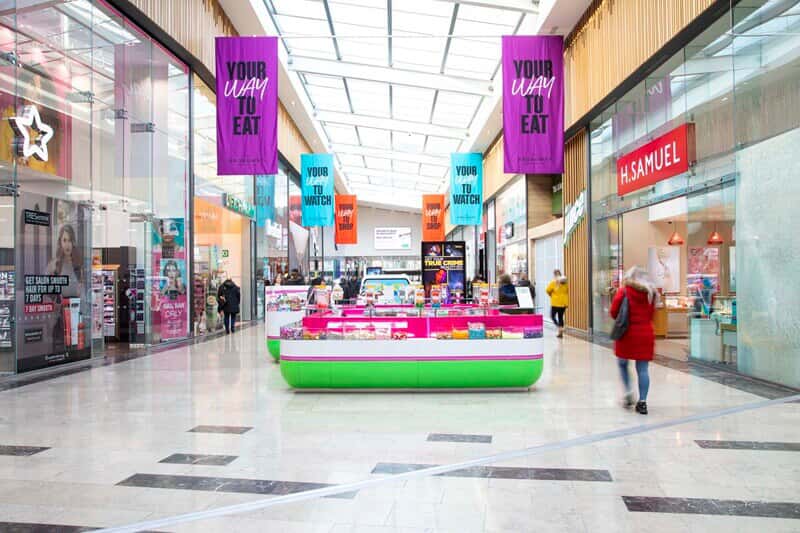
Your signage starts shaping someone’s view of your business before they walk through the door. Outside, it helps them decide whether to come in. Inside, it tells them where to go and what’s on offer.
When it works, customers barely have to think about it. When it doesn’t, the confusion sticks. A hard-to-find entrance, unclear offer or poorly signed layout can be enough to lose a sale and make the whole visit feel less positive.
Here’s what to consider when planning retail signage in Leeds, with examples from projects completed by FASTSIGNS Leeds.
Why retail signage matters
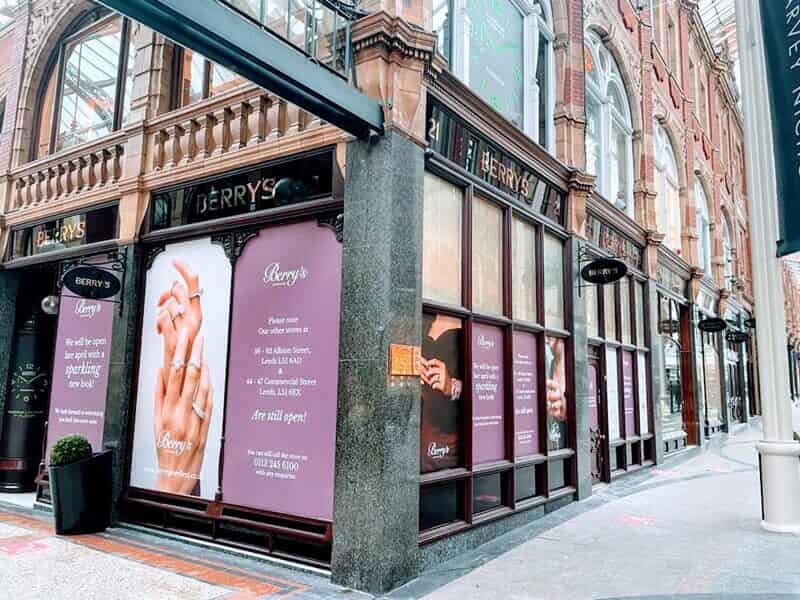
Good retail signage helps customers understand the business quickly and move through the space with less effort.
It can:
Improve visibility by making the shop easier to spot from the street, pavement or car park
Support the customer journey with clear directions to tills, fitting rooms, departments and collection points
Promote products and offers through window graphics, point-of-sale signs and digital displays
Build trust in the business by keeping the shopfront and interior consistent and well maintained
Reduce missed sales by making prices, promotions and product information easier to find
Types of retail signage: what are your options?
Retail signage shapes how customers find the shop and move through it. The right mix depends on the building, the layout and the kind of information people need.
Exterior shopfront signs
Exterior signs help people spot the business before they reach the door. They need to suit the building and be easy to read from the direction people approach.
Fascia signs
Fascia signs sit above the entrance or windows and usually carry the shop name and branding. The size and contrast should suit the viewing distance.
Projection signs
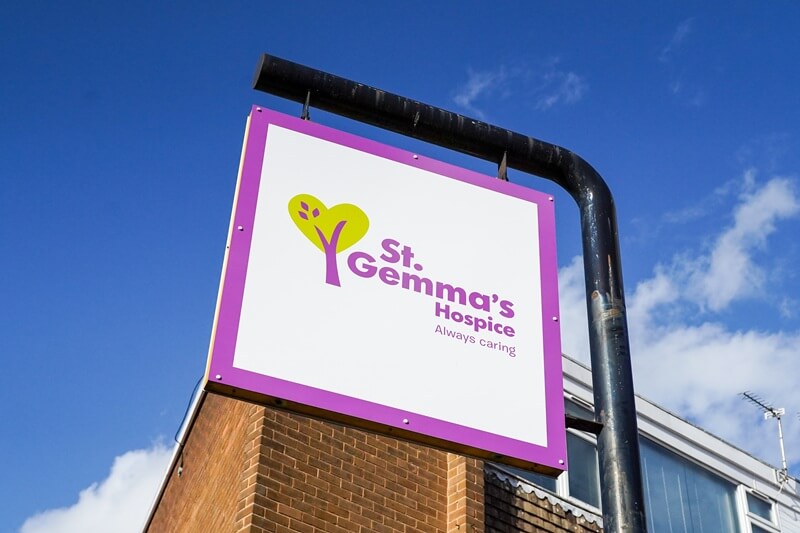
Projection signs sit at roughly 90 degrees to the building, so they’re easier to see from further along the pavement. They work well on busy high streets where front-facing signs can be missed.
Illuminated signs
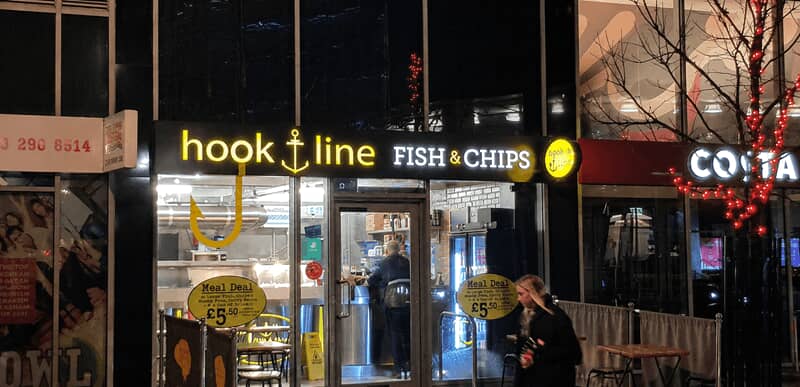
Illuminated signs keep the shopfront visible after dark and during winter afternoons. The design needs to account for power, installation and any limits on brightness.
Built-up letters
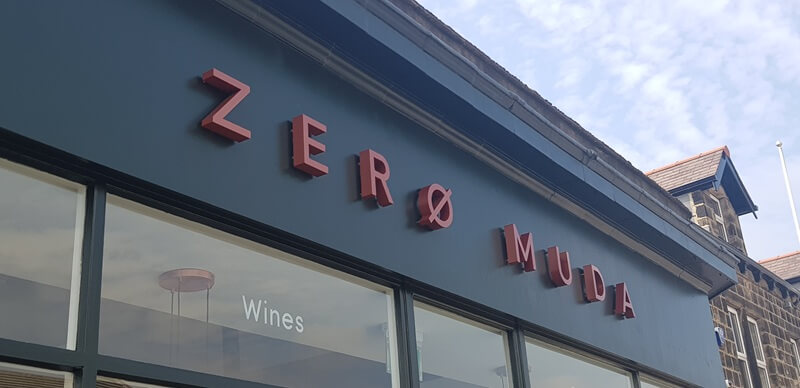
Built-up letters add depth to a shopfront and create a more architectural finish. They can be fixed directly to the building or mounted slightly away from the surface.
A-boards and pavement signs
A-boards place a changing message close to passing footfall. They’re useful for daily offers or directions to a shop set back from the main route.
Window graphics and displays
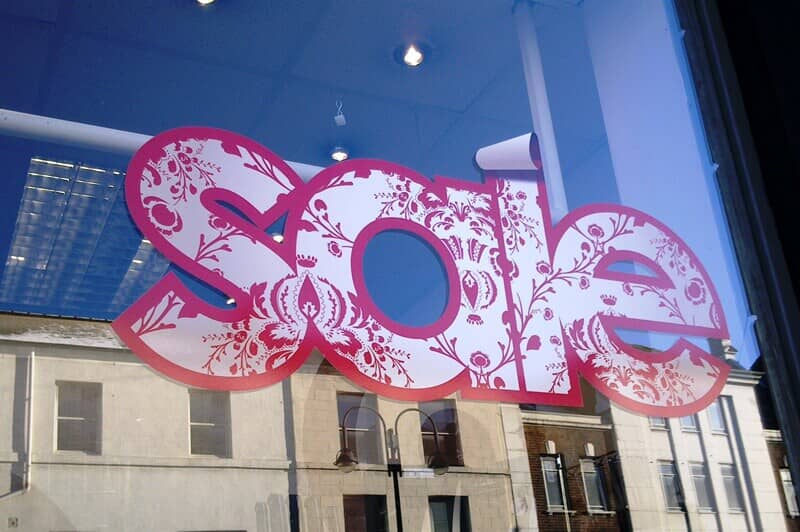
Window graphics make use of existing glass space. They can support the brand, promote an offer or add privacy.
Window vinyl
Window vinyl can carry a logo, opening hours or a short promotional message. It works well for both permanent branding and short campaigns.
Frosted film
Frosted film adds privacy while still allowing light through. It’s often used on internal glass or windows where full visibility isn’t needed.
Cut lettering and logos
Cut vinyl lettering leaves more of the shop visible. It suits opening times, logos and short pieces of information.
Full window graphics
Larger printed graphics create a stronger visual presence. They’re often used for seasonal campaigns or empty retail units.
Whatever the format, the design needs to work on the real window. Reflections and products behind the glass can both affect how clearly it reads.
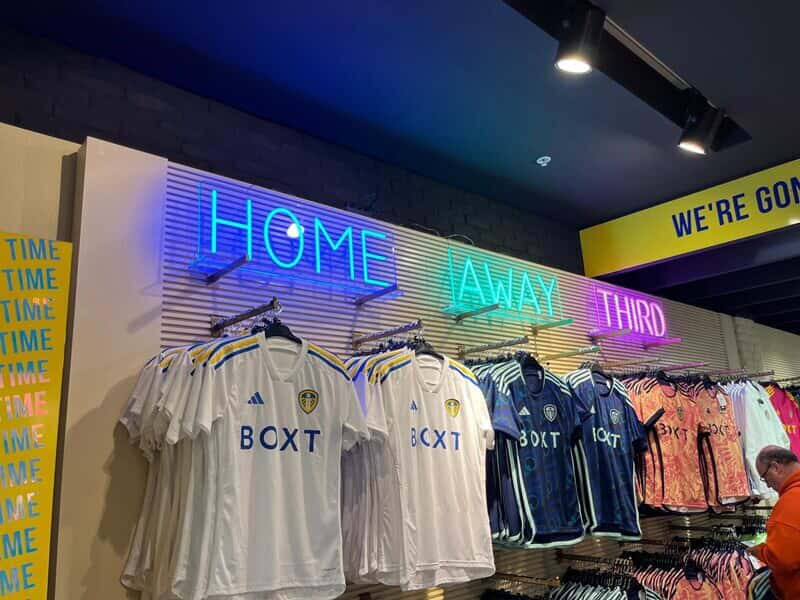
Interior signs help customers understand the space and find what they need. They also carry the branding beyond the shopfront.
Directional signs
Directional signs point customers towards key areas like tills, fitting rooms or collection points. Use the same wording throughout so the route stays clear.
Point-of-sale signs
Point-of-sale signs sit close to products and offers. They can explain a promotion or give customers the information they need before buying.
Floor graphics
Floor graphics can guide queues or draw attention to a display. The message should be brief and placed where people will naturally see it.
Wall graphics
Wall graphics bring colour and branding into the wider shop. They work well in larger spaces where blank walls would otherwise feel underused.
Digital signs
Digital signs suit information that changes regularly. They can show menus, offers or product details without needing a new printed sign each time.
The content still needs to be kept up to date. An old offer quickly makes the screen feel neglected.
Retail signage in Leeds: local examples
FASTSIGNS Leeds has worked with retail businesses across the city for over 30 years. The projects vary, but each one starts with the site and the problem the signs need to solve.
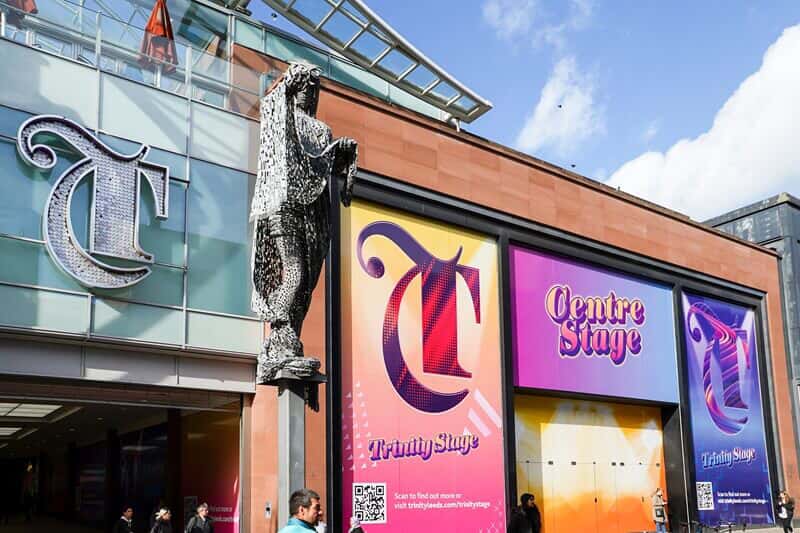
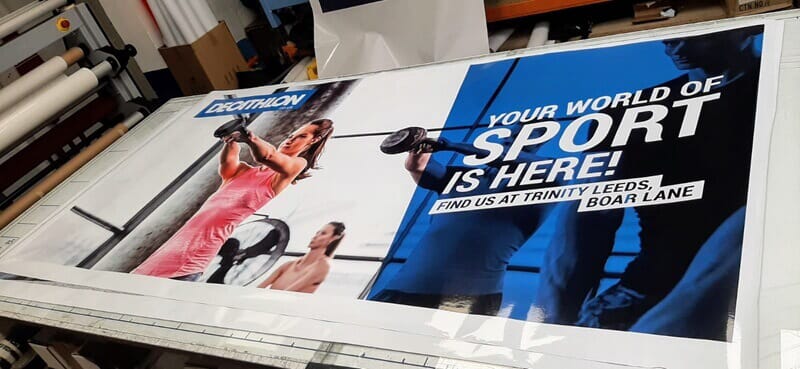
At Trinity Leeds, the team has supplied signage since the centre opened in 2013. The work has included shopfront vinyl, illuminated logos, event signage and digital displays.
Read more about the FASTSIGNS Leeds work at Trinity Leeds.
Howgate & Farrar needed to replace exterior signs that had become worn. The finished project covered the main shopfront, lighting and pavement signs, so the whole frontage worked together.
View the Howgate & Farrar case study.
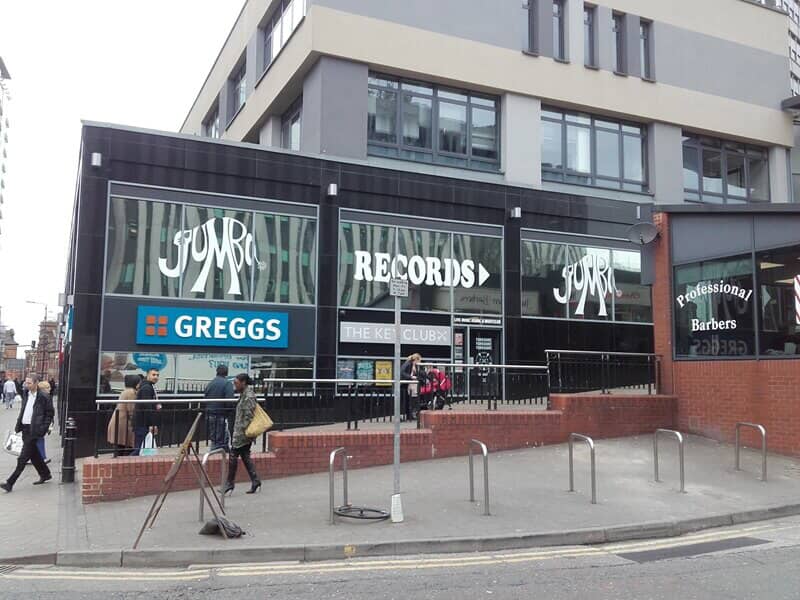
When Jumbo Records moved to the Merrion Centre, the existing signs were removed and fitted at the new shop. New graphics on the upper-floor windows helped make the store easier to spot from Merrion Street.
View the Jumbo Records case study.
What makes signage work for retail?
Good retail signage starts with the site and the person reading it.
Start with viewing distance. Lettering above a till can be smaller than a shop name seen across a car park. Contrast matters too, especially where reflections or neighbouring businesses make the background busy.
Keep the wording short. Opening hours need detail; a sale sign probably doesn’t. Trying to make one sign explain everything usually leaves it saying very little.
Choose materials to suit the location and how long the sign needs to last. A temporary window promotion has a different job from an exterior fascia that will stay in place for years.
Think ahead as well. Opening hours or prices could change. Removable vinyl, replaceable panels or digital content can make updates easier.
FASTSIGNS Leeds has an in-house design team, so you don’t need finished artwork before getting started. You can bring brand guidelines, an existing design or a rough idea, and the team will help work out what suits the space.
“We start by looking at where the sign will be seen from and what it needs to do. Once that’s clear, we can recommend something that suits the site and the budget.”
Andy Simpson, FASTSIGNS Leeds
How the process works
1. Talk through the project
The team will ask about the site, your timescale and what the signage needs to do. A site survey may be arranged where measurements or access need to be checked.
2. Agree the design
The team prepares the artwork and supplies proofs so you can see how the finished signs will look. Any changes are agreed before production begins.
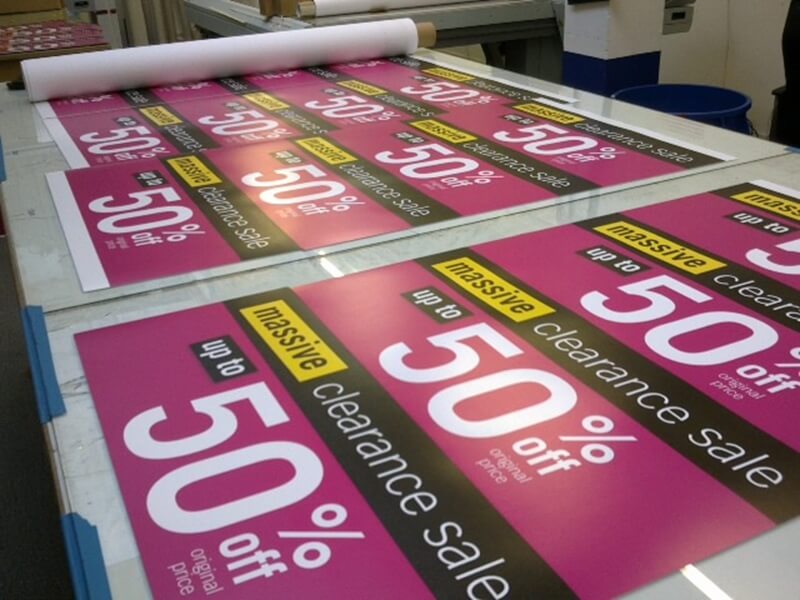
3. Produce the signs
Once the design is approved, the signs are made at our Leeds production facility. Timescales and cost depend on the specification and quantity.
4. Arrange installation
FASTSIGNS Leeds has its own installation team. The timing is agreed around the requirements of the site, with overnight fitting used on projects such as Trinity Leeds.
Contact FASTSIGNS Leeds to discuss your retail signage project.
Frequently asked questions
Do I need planning permission for a shop sign in Leeds?
Some signs need advertisement consent. This can depend on the size of the sign, where it sits and whether it’s illuminated.
It’s worth checking before anything is ordered, especially for listed buildings or premises in a conservation area.
How long does retail signage take to produce?
It depends on the type of sign and the work involved in fitting it. FASTSIGNS Leeds can give you a realistic timescale once the design and site requirements are clear.
Can FASTSIGNS Leeds help with the design?
Yes. The in-house team can work from a rough idea, existing artwork or your brand guidelines.
What affects the cost of retail signage?
The quote will depend on the size of the signs and the materials used. Lighting or difficult access can also add to the cost.
Do you work with independent shops?
Yes. FASTSIGNS Leeds works with independent retailers as well as larger stores across Leeds and West Yorkshire.
Talk to FASTSIGNS Leeds about retail signage
FASTSIGNS Leeds has worked with businesses across Leeds and West Yorkshire for over 30 years. The team can help with design, production and installation.
Contact FASTSIGNS Leeds to discuss your shopfront, interior signs or wider retail signage project. Or to get started, get a free quote today.


