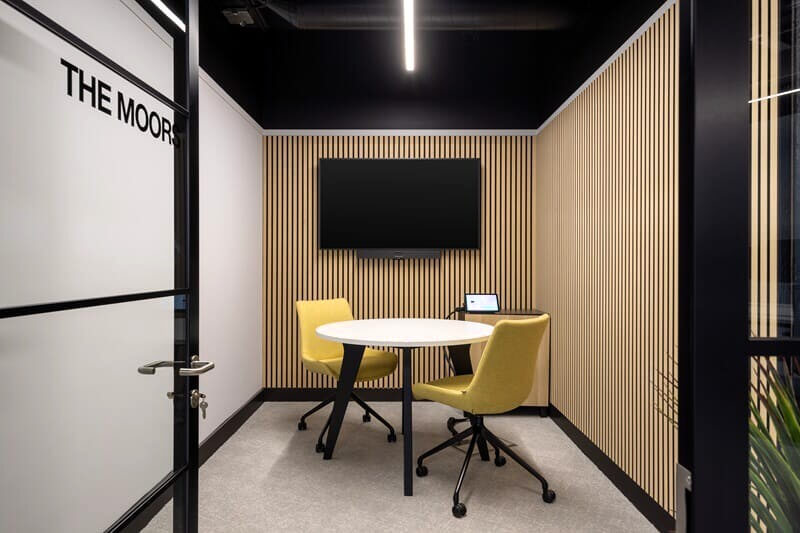
Your office signage is doing more work than most people give it credit for. Before a visitor reaches reception, signs have already told them whether they’re in the right building, where to park and which entrance to use. Inside, signage is directing people around the space, communicating your brand, meeting legal requirements and shaping how the whole place feels to anyone who walks through it.
Get it right and it all runs quietly in the background, but get it wrong, or let it age, and the gaps start to show.
This guide covers everything Leeds businesses need to know about office signage: the types of signs needed, the materials worth understanding, how a project comes together and what local offices have done with their space. If you’re fitting out a new office, refreshing a tired one or replacing signs after a rebrand, it should give you a clear picture of what’s involved.
Why office signage matters more than you might think
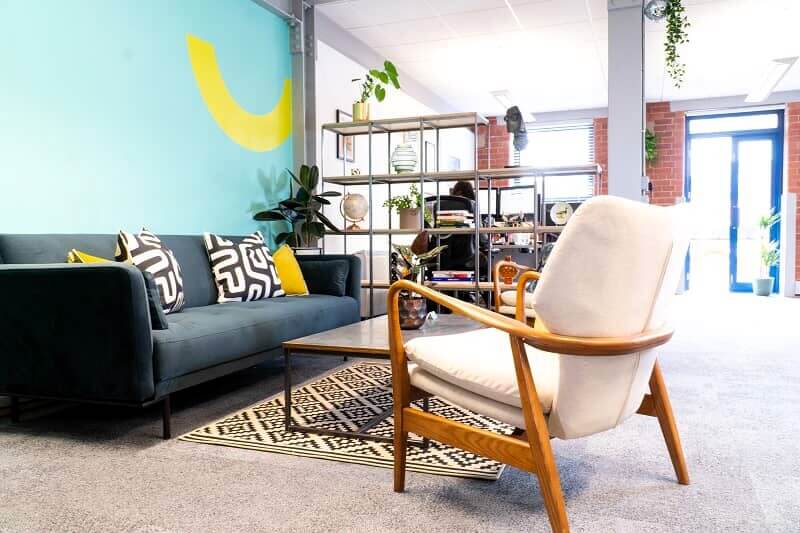
A survey of 2,000 UK and US office workers found that 40% had their perception of a company negatively affected by their experience in the reception area. Signage isn’t the whole picture, but it’s part of that first impression, and it’s one of the easier things to get right.
Beyond reception, office signage covers a lot of ground: wayfinding, meeting room identification, legal notices and wall graphics. In a lot of offices, this signage has built up gradually – a mismatched collection of materials, ages and styles that nobody sat down and planned. This guide is a practical starting point for thinking about it properly.
What types of signage does an office need?
The short answer: more than most people expect. Here’s a breakdown by area.
Reception and entrance signage
Reception is the first thing clients, staff and visitors see when they walk through the door. A branded wall sign or built-up logo behind the desk sets the tone immediately. When it looks the part, it tells people that someone has put thought into the first impression.
For offices in shared buildings, entrance signage and building directories matter as much. If visitors can’t find you before they’ve walked in, you’ve already made an impression, but not the one you wanted.
Wayfinding and directional signs
Office wayfinding signs save time and reduce friction, especially for visitors unfamiliar with the space. Floor plans at key decision points, corridor signs, lift lobby direction signs and clear room signs all cut down on the “which way do I go?” moments.
Consistency matters. Signs that use the same font, colour and placement height throughout the building make finding your way around intuitive. Mismatched fonts, varying heights and rooms that are signed while others aren’t force people to stop and work it out.
Meeting room and door signs
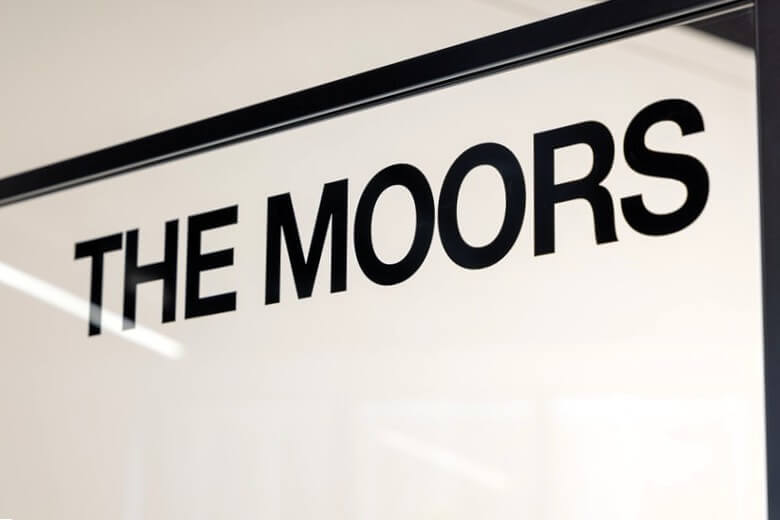
Meeting room signs do a simple job: tell people which room is which. They can also show capacity, any AV instructions or room booking information. Some of the most common formats are acrylic plaques, self-adhesive vinyl on glass and digital room-booking displays.
Door signs more broadly – like nameplates for individual offices, department labels and accessible toilet signs – need to be cohesive. A consistent system across all doors reads better than a collection of different formats added piecemeal over the years.
Health, safety and compliance signage
Health and safety signage in UK workplaces is a legal requirement under the Health and Safety (Safety Signs and Signals) Regulations 1996. In an office, you’ll typically need:
Fire exit and fire door signs
First aid point and defibrillator location signs
Assembly point signs (usually positioned outside the building)
Accessible toilet and facility signs
Hazard notices for any restricted or specialist areas
Window and glass manifestation
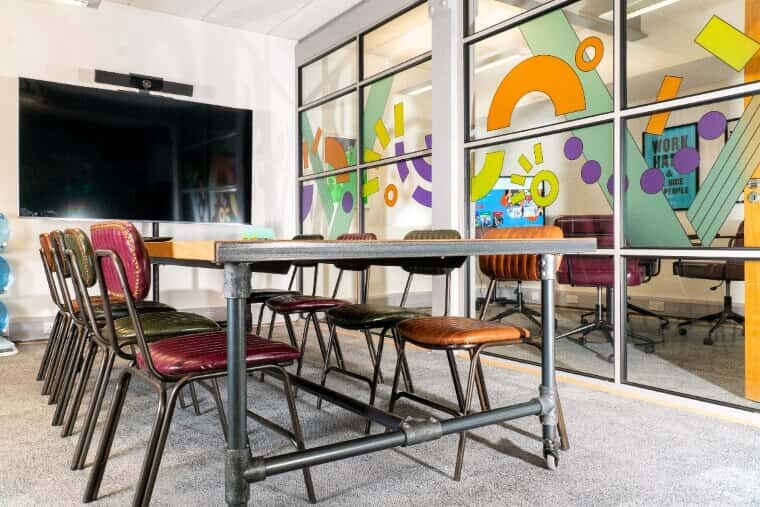
All offices have some form of glass – glazed partitions, internal glass walls or street-facing windows, and a lot of it is doing nothing. Frosted or printed vinyl on glass adds privacy, controls light and can carry your branding without blocking the space entirely.
For meeting rooms and glass-walled offices, manifestation also meets building regulations around glazed surfaces. It marks the glass so people don’t walk into it, which makes it functional and visual at the same time.
Wall graphics and murals
Large-format wall graphics can transform a corridor, reception or open-plan office from a functional space into something that feels considered. That might be company values, a timeline graphic, a bold typographic treatment or a design that uses your brand colours.
Not sure what your office needs? Talk to our Leeds team for friendly, no-obligation advice.
Recommended materials for office signage

Choosing the right material affects how a sign looks, how long it lasts and how well it copes with daily use. Here’s what’s worth knowing.
Acrylic (Perspex) signs
Acrylic gives a clean, contemporary finish. It’s commonly used for reception signs, meeting room plaques and company logos. Printed or coloured acrylic can be cut to shape, laser-engraved or built up in layers for a three-dimensional effect.
The catch: it can scratch in high-traffic areas. For a reception wall or a glass door plaque, it’s a great choice. For a busy corridor or a door that gets knocked daily, aluminium could be a better fit.
Aluminium and metal
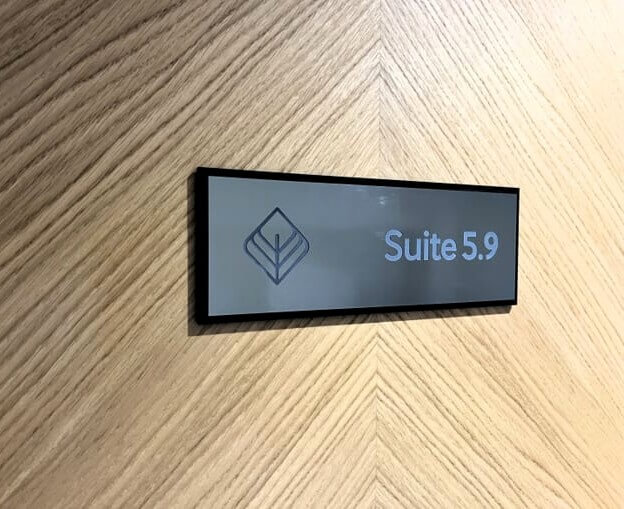
Aluminium composite is the go-to for interior office signs that need to last. It’s rigid, lightweight, holds up well to cleaning products and doesn’t warp or change colour over time. Brushed aluminium gives a premium finish for building directories, door plaques and reception signs.
For signs in public-facing areas, or anything that will be touched and cleaned daily for years, it’s usually the better long-term call.
Engraved signs
Engraved signs, whether cut into stainless steel or hard laminates, are built to last. They hold up to daily contact, cleaning and polishing without fading or peeling, making them a strong choice for door plaques, room signs and any signage that will be handled regularly.
Vinyl and printed graphics
Vinyl is the most versatile material in office signage. Wall graphics, window manifestations, floor graphics, door vinyl, temporary notices – all of them use self-adhesive vinyl film. It’s cost-effective, fast to produce and available in a wide range of finishes like matte, gloss and frosted.
Longevity depends on the specification. Wall graphics in a dry, indoor environment last well. Vinyl applied to the outside of windows faces UV exposure and weather and needs a more durable grade. We’ll always point you to the right specification for where a sign is going.
Digital and LED displays
Digital screens in reception areas, room booking displays on meeting room doors and LED wayfinding panels are increasingly common in modern offices. The advantage is flexibility: you can update the content without reprinting anything.
They work best as part of a wider signage scheme, not as a replacement for everything physical. A screen showing room availability is genuinely useful, but a screen where a door plaque would do the same job just adds unnecessary cost and the potential for something to go wrong.
The process for office signage
Working with us on an office signage project is straightforward. Here’s what to expect, step by step.
Initial conversation. We start with a brief chat about your project: what you need, what you're trying to achieve and what artwork or visuals you might already have. From there, we'll work out whether a site survey makes sense.
Site survey. If it would help to see the space before anything gets quoted, we'll arrange a visit at a time that suits you. We'll take measurements, assess the area and talk through your ideas, budget and end goal.
Quote and proofing. Once we've got a clear picture of the project, we'll send you a quote. After that, detailed proofs are produced so you can see exactly what your signs will look like before anything goes into production. If you need design support, our in-house team can help, but many clients come with artwork ready.
Production. The majority of our signs are produced at our Leeds facility. For some large bespoke signs, such as illuminated logos, we use trusted and vetted suppliers. Fast turnaround is what we're built for. The exact timescale depends on the size and complexity of the job, and we'll confirm it when we quote.
Installation. Our team handles the install at a time that works for you: during the working day or out of hours if needed. We're used to working around busy offices and coordinating with site managers, facilities teams and building management.
Aftercare. The project doesn't end when the signs go up. We're available for maintenance, repairs or keeping the rest of a site up to date as your business changes.
Office signage in Leeds: projects we’ve worked on
WorkWell Offices, Carrwood Park
WorkWell has been a FASTSIGNS Leeds customer since 2009. They run premium serviced office spaces across Leeds, and our work with them is ongoing, which is exactly what signage for a managed office needs to be.
When tenants move in or out, WorkWell need signage turned around quickly. Over the years that’s meant frosted vinyl manifestations on glazed partitions, individual company logos on meeting room glass, brushed stainless door plaques for individual suites and wayfinding and floor graphics throughout the buildings. We’ve also fitted built-up stainless-steel letters to the exterior of the buildings.
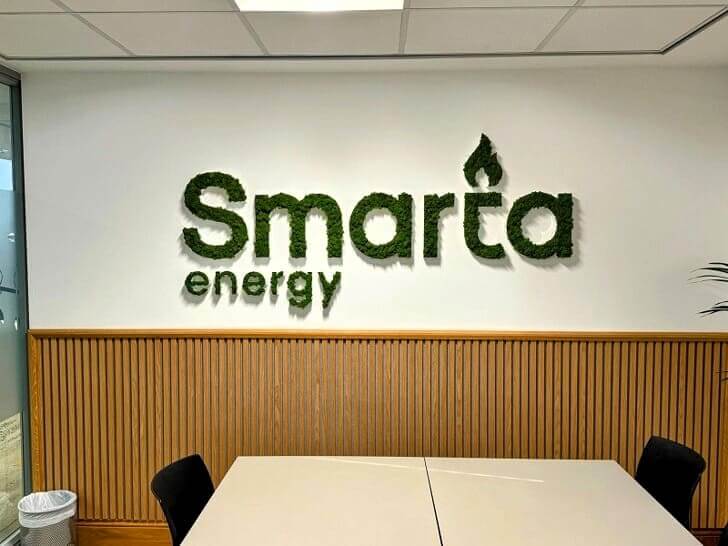
One of the more distinctive jobs: a moss letter installation on the wall of Smarta Energy’s office suite.
After 17 years, WorkWell has a signage partner they can call without having to explain the buildings or what good looks like. That’s what a long-term working relationship is all about.
Childerstone Project Management, King Street
When Childerstone Project Management opened their new Leeds headquarters at 12 King Street, they needed interior signage that matched the quality of the space. They’d grown a lot over the past few years, and the space needed to reflect that.
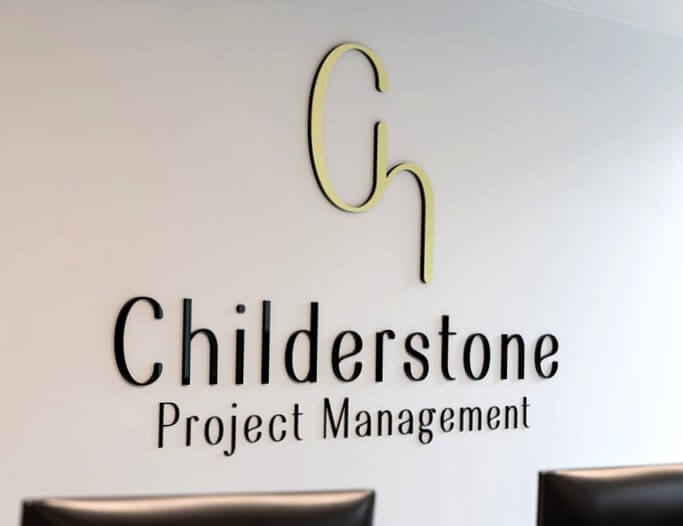
We installed a bespoke ‘Ch’ logo in brushed gold aluminium composite, ‘Childerstone’ wall lettering in 10mm gloss black acrylic and meeting room names in gloss black self-adhesive vinyl on the glass doors. The combination of gloss black and brushed gold gives the reception a clean, contemporary look without being flashy, which fits a boutique consultancy’s brand exactly right.
“The signage does exactly what it needs to – it looks professional and sets the right tone as soon as clients walk through the door.”
— Alice Walker, Marketing Manager, Childerstone Project Management
Frequently asked questions
What signage is required by law in a UK office?
Under the Health and Safety (Safety Signs and Signals) Regulations 1996, workplaces must display signs for fire exits, fire doors and assembly points. First aid locations, defibrillator points and accessible facilities also require signage in most buildings. The HSE’s L64 guidance sets out exactly what’s required and in what format.
How long does office signage take to produce and install?
It depends on the scope of the job. A straightforward install can be turned around quickly; larger projects with site surveys, multiple sign types or phased installation take longer. We'll give you a realistic timeline when we quote.
Can you update signage after a rebrand?
Yes, and it’s a common reason businesses come to us. We’ll take a look at what’s already in place, work out what needs replacing and produce new custom office signs to fit the updated brand.
What if we’re in a leased office and can’t make permanent changes?
Most standard interior signage doesn't require permanent changes and is straightforward in a leased space. Where vinyl wall graphics are involved, it's worth knowing that most use high-tack adhesives; removal can mark the paint or wall surface, though repairing it isn't a big job. We do offer vinyls with removable adhesives, with some limitations on what they can be used for. For anything structural or more permanent, we'd suggest checking with your landlord first. We can help you work out what's achievable within your lease terms.
Do you offer office signage installation across Leeds?
Yes. Design, production and installation are all handled at FASTSIGNS Leeds. We work with businesses across Leeds and the wider West Yorkshire area, and can install further afield for clients with locations outside the region.
Getting started
Office signage covers more ground than most people realise when they first start thinking about it – from the sign above reception to the fire exit at the end of the corridor. The businesses that get it right don’t necessarily spend more. They plan it properly, choose the right materials and work with a supplier who understands what they’re trying to achieve.
We’ve worked with businesses across Leeds and West Yorkshire for over 30 years. Whatever the scale, the approach is the same: understand what you need, get the design right, produce it well and install it without disrupting your day.