Regulatory Signs, Safety Signs, & Custom Accessible Signage
Make Sure Your Business Complies
As a business owner, you must take action to show that your company cares about both safety and inclusivity in the workplace. That not only means having safety procedures and being compliant with laws and regulations but communicating your commitment to both. FASTSIGNS® can help you reassure your customers that you are committed to their health, safety and comfort. We offer custom regulatory and warning signs and can help you communicate all of your policies.
When it comes to regulations, it's important to be clear about your compliance. In the UK the Disability Discrimination Act (1995) and more recently the Equality Act (2010) requires that service providers, no matter their size, have made reasonable adjustments to their buildings, in order to make them accessible to those with disabilities, which also means you need to have DDA signage throughout your property. It’s important to factor these signs into your overall visual communication strategy.
What Are DDA & Regulatory Signs?
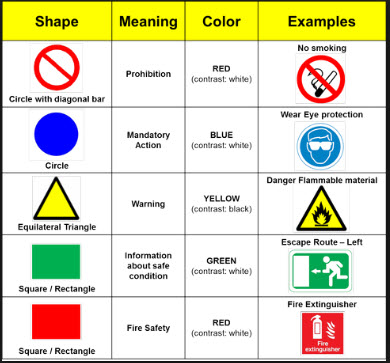
Regulatory signs communicate policies and precautions your business takes to protect any visitors. At FASTSIGNS, we offer a wide variety of regulatory signs that will inform all visitors of laws, regulations and any requirements.
These signs are often found in permanent use rooms and areas, including:
- Stairwells
- Lifts
- Fire exits
- Entryways
- Car Parks
If you need to alert your customers about these kinds of policies, the FASTSIGNS team can help you clearly deliver your message. These signs are a critical part of any public space or work area and should always be installed in areas where they are highly visible and easy to read.
DDA Sign Requirements
Here are a few of the DDA sign requirements to consider when creating a signage plan:
- BSI: ISO 17049:2013 provides information on the application of Braille.
- BS 8300:2001 Design of buildings and their approaches to meet the needs of disabled people
- DDA Signage must exhibit a contrast in both the background and text colours.
- DDA compliant signs must be in a clear and recognisable font
- If a sign contains a pictogram that identifies a permanent space, then tactile text descriptors are also required.
- Pictograms may include a wheelchair or gender symbols for specific restrooms.
- Braille lettering must be placed below and centred to all text with a minimum of 2.5mm between dots in the same cell (horizontally and vertically) and 6mm from the dots in the next cell.
- If tactile in nature, the lettering should be embossed with 1-1.5mm or more in depth, letters should be a minimum of 15mm in height and should be traceable with the breadth of one finger.
- Depending on the size of the text used, interletter spacing should be 20-30% and interword spacing being 25%.
- ALL DDA compliant signs must include both braille letters and raised to the touch for the visually impaired.
- For tactile signs, the DDA requires that the baseline of the lowest raised character be a minimum of 1.3m above the finished floor, and the baseline of the highest raised character be a maximum of 1.6m above the finished floor.
- Interior DDA signs should be installed on the latch side of the door from the room to be labelled.
- DDA signs should not be mounted directly on a door.
- If there is not enough space to mount the sign in the specified location, it may be installed on the nearest adjacent wall in a clearly visible location.
The Importance of DDA Requirement Signage
Clearly communicating your DDA compliance will protect your business and help your visitors feel welcome and supported. The team at FASTSIGNS is ready to handle all your DDA and safety signage needs so that you can have the peace of mind you need.
Contact your local FASTSIGNS centre today to learn more about our DDA and safety signage.
Products and services may vary by location. Please reach out to your local FASTSIGNS center for more information.