
Why Should You Analyse Your Competitors' Signs?
Most business owners walk past their competitors every day without truly seeing them. You notice their shop is busy or quiet, perhaps glance at their window display, but do you actually study their signage? This oversight represents a missed opportunity, because your competitors' visual communications reveal valuable intelligence about market positioning, customer targeting and the gaps you could exploit.
Understanding what your competitors communicate through their signage - and what they don't - can reveal opportunities to position your business more effectively.
So let FASTSIGNS® Manchester guide you on how to read the competitive signage landscape and translate those observations into actionable strategy.
What Does Premium vs Budget Signage Tell You?
The quality and style of competitors' signage immediately signals their market positioning. Walk through any Manchester high street and you'll notice stark differences. Some businesses invest in high-quality materials, professional design and regular maintenance whilst others use basic printed signs that fade and peel.
Premium signage typically indicates businesses targeting customers who value quality and are willing to pay accordingly. If most competitors use budget signage whilst targeting mid-market customers, there's an opportunity to differentiate through superior visual communications. On the other hand, if you're surrounded by expensive signage whilst targeting value-conscious customers, simpler but professional signage might position you more appropriately.
The key isn't to copy what competitors do, it's to identify whether their signage matches their actual market positioning. A restaurant claiming premium dining but displaying tired, dated signs creates an opportunity for competitors with consistent quality signals throughout their customer experience.
How Do You Identify What Competitors Aren't Saying?
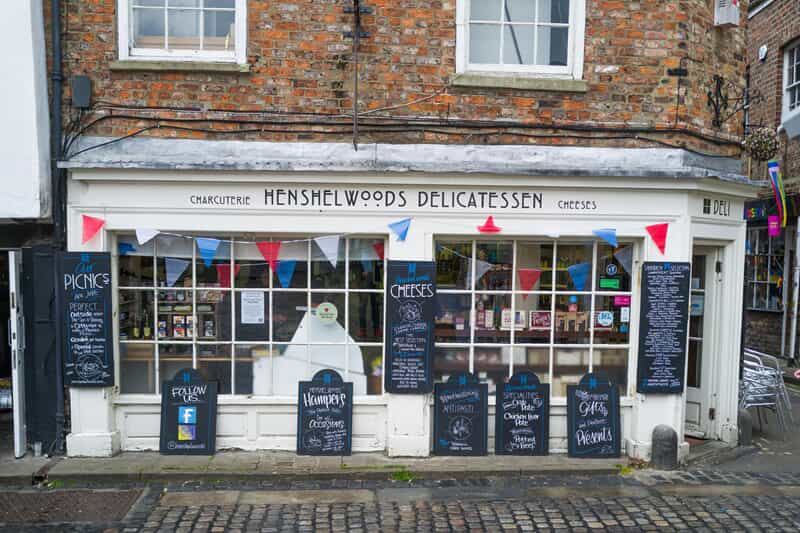
The most valuable competitive intelligence often comes from what signage omits. Create a simple checklist of information customers might want: opening hours, parking availability, accessibility features, payment methods, service range, pricing indicators and online presence. Walk your local area and note what each competitor communicates versus what they omit.
If you discover that none of your competitors display helpful dietary information on, say, available vegan options, gluten-free alternatives or allergen details this is an opportunity for you. By prominently featuring this on external signage, you can
capture a significant market segment competitors were inadvertently excluding.
Service businesses often overlook practical concerns. Professional firms might display credentials but forget consultation availability or specialist areas. Retail businesses might showcase products whilst failing to communicate parking options
or return policies that influence purchasing decisions.
What Can Signage Placement Tell You?
Where competitors position their signs reveals what they believe customers prioritise. Notice what information sits at eye level versus higher or lower positions. What appears on street-facing signage versus only inside. These placement
decisions reflect beliefs about customer priorities.
If every competitor places pricing only inside premises whilst price is a primary decision factor, there's an opportunity to communicate pricing more prominently. Similarly, if all competitors emphasise product range whilst customers actually value service quality, signage focusing on staff credentials could differentiate your business effectively.
Manchester's independent retailers often position key differentiators at eye level for passersby moving at speed, whilst destination shopping areas use more detailed signage knowing customers are already there for a reason.
How Do Visual Design Choices Signal Positioning?
Colour palettes, typography, imagery styles and design complexity all signal positioning. Traditional businesses often use serif fonts and muted colours whilst contemporary brands favour sans-serif typography and bold colours.
Analyse whether competitors' design choices align with their stated positioning. A business targeting young professionals but using design appealing to retirement-age customers creates confusion you could exploit through more coherent communications. If every competitor uses similar design, deliberately different aesthetics which are still appropriate for your market can create immediate differentiation.
Local businesses often fall into design similarity traps where entire districts develop unconscious visual conformity. These patterns create opportunities for businesses willing to break conventions whilst maintaining professional credibility.
How Do You Turn Analysis Into Action?

Gathering competitive intelligence only creates value when translated into action. The goal isn't copying competitors. It's identifying positioning opportunities they've missed or executing strategies more effectively.
Create a simple competitive positioning map plotting competitors on key market dimensions, perhaps price versus quality, traditional versus contemporary, or specialist versus generalist. Position each competitor based on what their signage communicates, then identify gaps where customer segments might be underserved.
Develop your unique value proposition by asking what your business offers that competitors don't, or what you can communicate more effectively. Your differentiation might be service speed, product range, local connection or depth of expertise. Ensure your signage clearly communicates that differentiation whilst competitors' signage doesn't.
Test positioning hypotheses before major investments. Temporary signage or digital displays allow experimentation whilst gathering customer response data. This prevents expensive mistakes whilst confirming which strategies actually resonate.
Set a schedule for systematic competitive review – we’d recommend quarterly or biannually - documenting changes in competitors' communications. You could even create a photographic record over time, noting changes in messaging, design and positioning. This reveals trends and helps you anticipate market shifts.
The businesses most successful at competitive positioning study their market systematically, identify genuine opportunities rather than copying competitors, and execute their differentiation consistently through high-quality visual communications.
Your competitors are showing you the market landscape every day. The question is whether you're taking time to truly see what they're revealing. So why not give FASTSIGNS® Manchester a call and together we’ll create signage that truly helps you take advantage of these underexploited opportunities?