
The signage industry is experiencing its most significant transformation in decades.
Understanding these trends allows businesses to maintain relevance with increasingly sophisticated customers who expect modern, responsive communications. In particular, the current digital signage boom reflects broader industry concerns about sustainability and measurable impact.
Companies that embrace these changes position themselves as forward-thinking whilst those that don't risk appearing seriously outdated.
Is AI really changing signage or just adding complexity?
So let’s talk about what’s on everyone’s mind right now: artificial Intelligence. AI is no longer just experimental in the signage sector: it's becoming foundational. Brands across the UK are now deploying AI-driven signage to automate content scheduling, personalise displays in real time and even predict viewer behaviour based on contextual signals.
Retailers are already implementing AI systems that use machine learning to serve hyper-relevant content to audiences based on demographics, location and behavioural triggers. A city centre clothing retailer might display different promotions to lunchtime office workers versus weekend shoppers, all automatically adjusted based on camera analytics and time-of-day patterns.
The practical benefits extend beyond clever content targeting. AI-driven systems reduce staff workload by automating scheduling whilst improving relevance. For businesses operating across multiple locations, centralised AI management can offer consistent brand messaging but with appropriate local customisation.
Are sustainable signage solutions worth the investment?
Sustainability isn’t just a buzzword any more. As UK businesses face growing regulatory and reputational pressure to reduce carbon output, one of the most defining digital signage trends of 2026 is the shift toward eco-conscious display technologies.
E-paper and bi-stable displays - think Kindle-style screens - consume energy only when content is changed, making them ideal for applications like wayfinding, timetables or corporate communications.
Power-efficient LEDs and MicroLEDs can offer significant operational benefits. Advances in energy efficiency mean today's LED displays consume up to 50% less power than models from five years ago, whilst MicroLED technology offers good brightness levels with reduced thermal load and longer lifespan. These efficiency gains typically offset higher upfront costs within 18-24 months through reduced energy bills.
But material sustainability matters too. The signage industry is shifting towards using more recycled materials, responsibly sourced substrates and modular systems that allow updates without requiring full replacement.
How can traditional businesses adopt interactive signage?
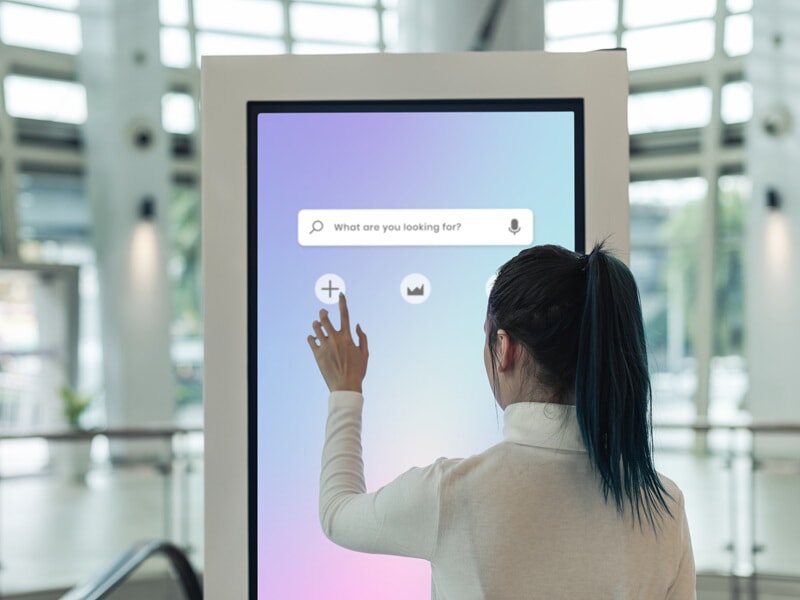
Interactive and immersive experiences represent another significant trend reshaping signage. Digital signage in 2026 is more intelligent, sustainable, visually advanced and adaptive than ever before, incorporating touchscreen capabilities, QR code integration, NFC technology - and even augmented reality elements.
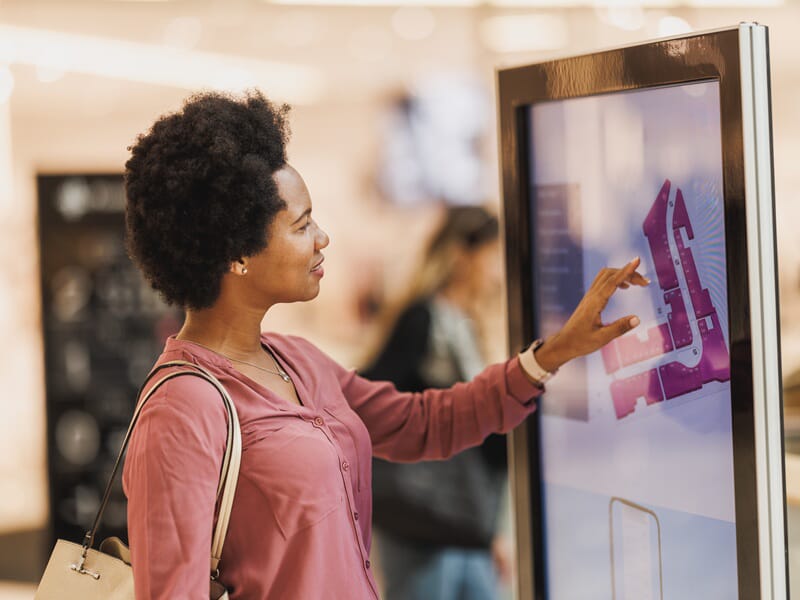
But implementation doesn't require massive investment. QR codes can be added to traditional signage, say linking physical menus to digital ordering systems and loyalty programmes. This hybrid approach is great for maintaining your individual brand aesthetic whilst providing the digital convenience customers increasingly expect. Similarly, touchscreen wayfinding in retail and hospitality reduces staff interruptions whilst improving customer satisfaction.
For traditional businesses hesitant about digital transformation the key is to start with specific pain points rather than comprehensive overhauls. Identify where your customers currently struggle or where staff spend endless time answering routine questions, then deploy targeted interactive solutions that address those specific challenges.
What does "Intelligent Signage" actually mean?
The industry is seeing what experts call "intelligent signage" becoming mainstream. These are systems that respond to viewer behaviour, environmental conditions and operational needs in real time.
Intelligent signage includes features such as weather-responsive content that adapts messaging based on local conditions – always a great help around Manchester! Contextual adjustments - should you be pushing umbrellas or sunglasses today? - happen automatically without manual intervention.
Occupancy-based messaging can also manage customer flow and safety. Venues can install sensor-integrated signage that displays current capacity, waiting times and alternative locations during peak periods, improving customer experience whilst managing regulatory requirements.
Integration with your other systems can also improve your operational intelligence. Restaurants can, for example, connect signage to stock management, automatically removing sold-out items from digital menus. Or retailers link can link to inventory systems and do the opposite: promote products with the highest current stock levels.
How do you best measure signage ROI right now?
Modern signage is of little use without measurable business outcomes. Analytics capabilities now standard in digital signage platforms can provide you with data on viewer engagement, dwell times, content performance and conversion rates.
To take one example: attribution tracking links signage exposure to financial outcomes. QR code integration, app connections, and proximity marketing enable businesses to track customer journeys from signage view to purchase, providing concrete ROI data previously impossible with traditional signs.
Rather than treating signage as an unavoidable expense, it can now be fairly seen as revenue-generating infrastructure with quantifiable returns.
What does this mean for you?
Ultimately success always comes down to how you implement these new opportunities strategically. Rather than badger you into wholesale transformation, at FASTSIGNS® Manchester we know that the most successful businesses identify high-impact opportunities where new technologies solve genuine problems.
We suggest you start with identifying business objectives rather than technology features. What customer experience improvements or operational efficiencies would drive meaningful value? Which staff tasks consume disproportionate time that signage automation could reduce? Where do competitors' superior communications create disadvantages for you?
Once we’ve completed this audit with you, we can help you identify how AI-driven content, interactive elements or sustainable technologies in single locations could add value to your business. We’ll help you measure the results you’re seeing, refine your approach and then scale it successfully across your business.
The 2026 signage landscape requires partnering with providers who can offer proven expertise spanning design, technology integration, content strategy and performance measurement in the here-and-now.
FASTSIGNS® Manchester will help you focus on genuine business value rather than technology for its own sake, and identify the right signage for where your business is today. We’re waiting to hear from you!