In the diverse commercial landscape of Northern England, the ability to communicate effectively across linguistic boundaries is no longer a peripheral concern. More than ever it is a fundamental pillar of inclusive and successful business practice. From the high streets of Manchester and Salford to the vibrant community hubs of Bradford, Blackburn and Oldham, our region is defined by its multiculturalism.
For any enterprise operating within these areas, bilingual signage represents far more than a simple translation exercise. It is a strategic tool for market access and always a powerful signal of respect.
The Linguistic Map of the Northwest
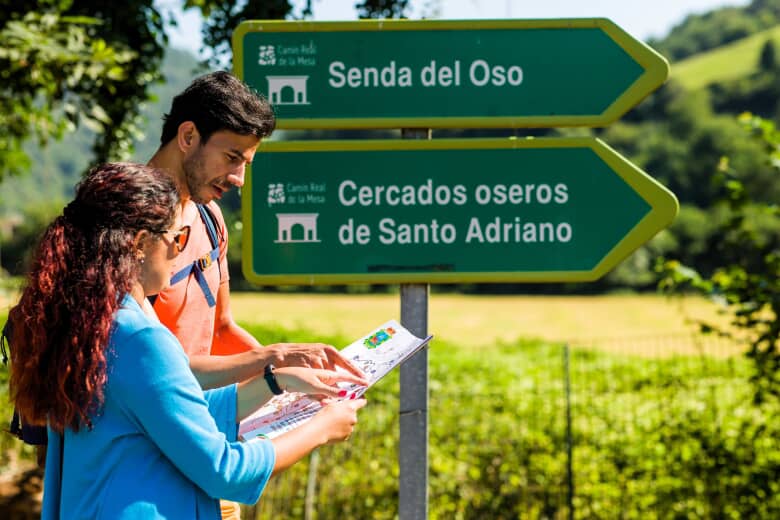
According to 2021 Census data, the Northwest remains one of the most linguistically diverse regions in the UK. Whilst English remains the primary language for the majority, a significant portion of our population speaks Polish, Urdu, Punjabi, Arabic and Bengali as their first language. In certain areas these languages are not just secondary, They are the primary mode of communication for a significant percentage of local residents.
For a business, acknowledging this diversity is firstly a matter of practical economics. By removing the language barrier, you immediately expand your potential customer base. Your customers are significantly more likely to engage with a service provider that speaks their language, not only literally but culturally too. Bilingual signage in the right place acts as a welcome mat, signalling that your business welcomes and is open to serving everyone, whatever their first language might happen to be.
Duty of Care
The decision to implement bilingual signage is often driven by a combination of practical necessity and commercial ambition. In public services areas such as healthcare and education, the duty of care often leads to all critical information being accessible in that community's primary languages.
Clear bi- or multilingual signage ensures, for instance, that patients in healthcare facilities are able to navigate the building without anxiety, find their way to treatment rooms and fully understand privacy notices. The Care Quality Commission (CQC) often looks for evidence of such inclusivity when assessing how "responsive" and "caring" a facility is. Failing to provide this can result in a service being deemed as inaccessible, potentially leading to a lower CQC overall rating.
The Design Challenge: Hierarchy and Script Harmony
Implementing a bilingual system requires a sophisticated understanding of visual hierarchy. A common error is to treat the second language as a subordinate "afterthought," which can undermine the message of inclusion. Effective design ensures that both languages are legible and balanced.
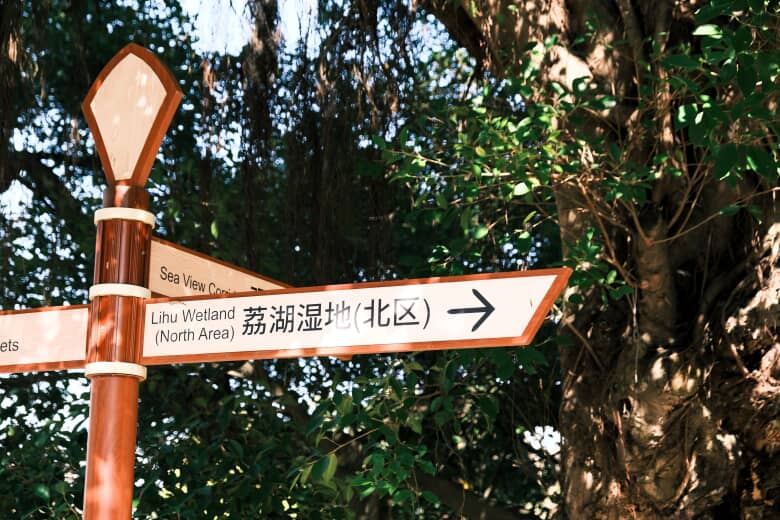
Parallel vs. Sequential Layouts: Parallel layouts, where English and the second language appear side-by-side, suggest an equality of status. This is often the preferred choice for main entrance signage and brand messaging. Sequential layouts, where one language follows the other, are often more space-efficient for longer lists, such as directional wayfinding in a hospital or large office complex.
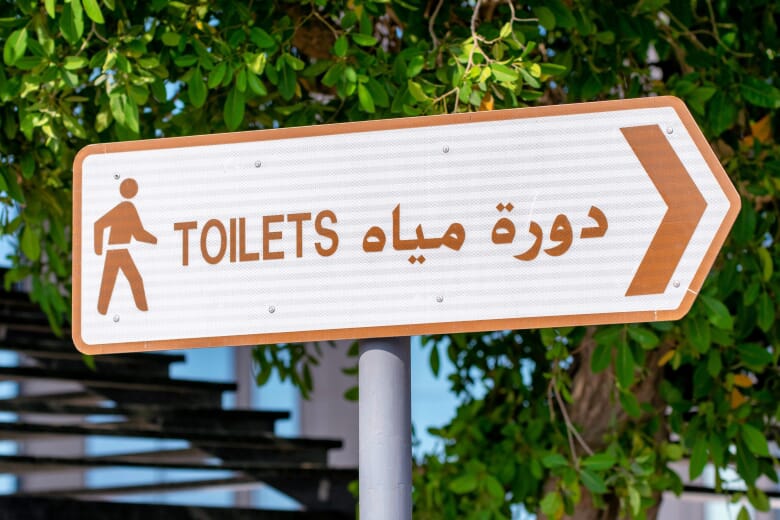
Managing Script Directionality: Languages such as Arabic and Urdu are written from right to left, which presents a unique challenge for layout and font pairing. It is essential to use character sets that are not only legible but also aesthetically compatible with the English text. A high-contrast, sans-serif font like Arial is often recommended for English to ensure clarity, but the second script must be selected with equal care to avoid a cluttered or "busy" appearance.
Visual Weight: Different scripts often have varying "visual weights." A professional signage partner will adjust the font sizes and line spacing to ensure that neither language appears visually dominant, maintaining a clean and professional aesthetic.
The Dangers of Automated Translation
A significant and often underappreciated risk in any bilingual project is the reliance on automated translation tools. "Google Translate disasters" are all too common and can be deeply damaging to a brand’s reputation. At best, they result in nonsensical phrasing; at worst, they can produce culturally offensive or dangerously inaccurate instructions.
In a professional setting, accuracy and trust in your service are paramount. This requires professional translation and cultural proofing by native speakers who understand the local context. For instance, the way a language is spoken in the Northwest may have subtle differences to the version spoken in its country of origin. Investing in authentic translation demonstrates that your commitment to the community is substantive and respectful, rather than a token gesture.
Sector-Specific Advantages
The benefits of bilingual signage are felt differently across different sectors:
Retail: In areas with high concentrations of specific ethnic groups, bilingual promotional signage can significantly increase footfall and build long-term brand loyalty.
Hospitality: For restaurants and hotels, speaking the customer’s language is the ultimate signal of hospitality, making international visitors and local residents alike feel at home.
Public Services: Clear, multi-language wayfinding reduces the burden on staff, who would otherwise spend a significant portion of their time providing directions or interpreting basic instructions. This can be all the more difficult and time-consuming when English isn’t your customer’s native language.
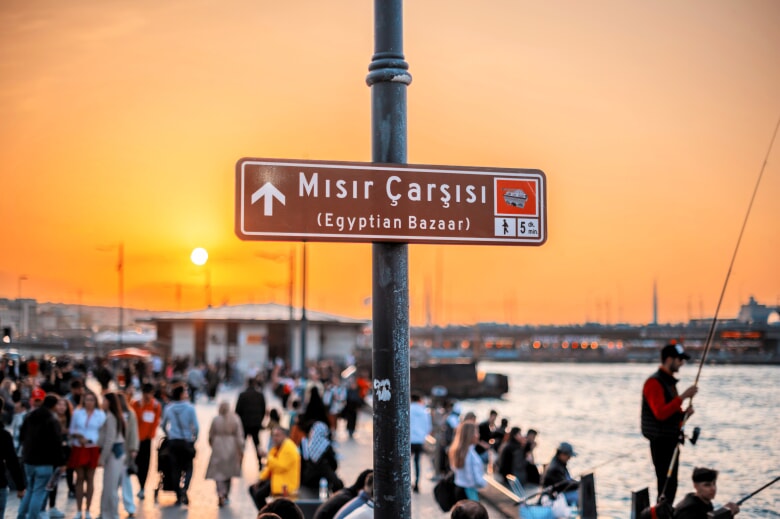
Temporary Signage: As a home to two well-known and successful football clubs, Manchester often hosts overseas fans, sometimes from nations in which English is not spoken by most of the population with any fluency. If a major sporting event is going to bring an influx of potential customers speaking a foreign language, why not invest in some temporary signage to attract their custom and give you a competitive edge?
A Strategic Investment in Inclusion
Bilingual signage can be a real investment in the long-term growth of your business and a way to fully engage your potential customer base to its fullest. In competitive markets like the Northwest being different from your competitors often means being the brand that takes the time to communicate with precision and respect. And at FASTSIGNS MANCHESTER we have a deep knowledge built up over years of experience of how to make your brand communicate optimally.
By moving beyond tokenism and embracing a strategic, well-designed approach to the language you use to communicate with your customers, you position your business as a modern, inclusive and professionally managed leader in its field. Why not give us a call?