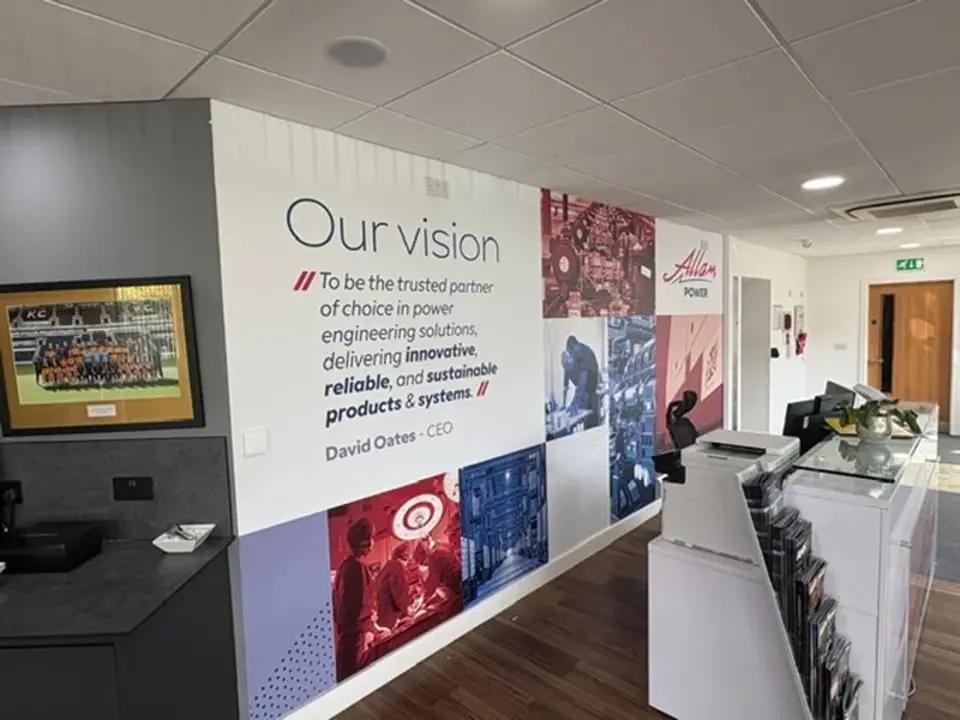
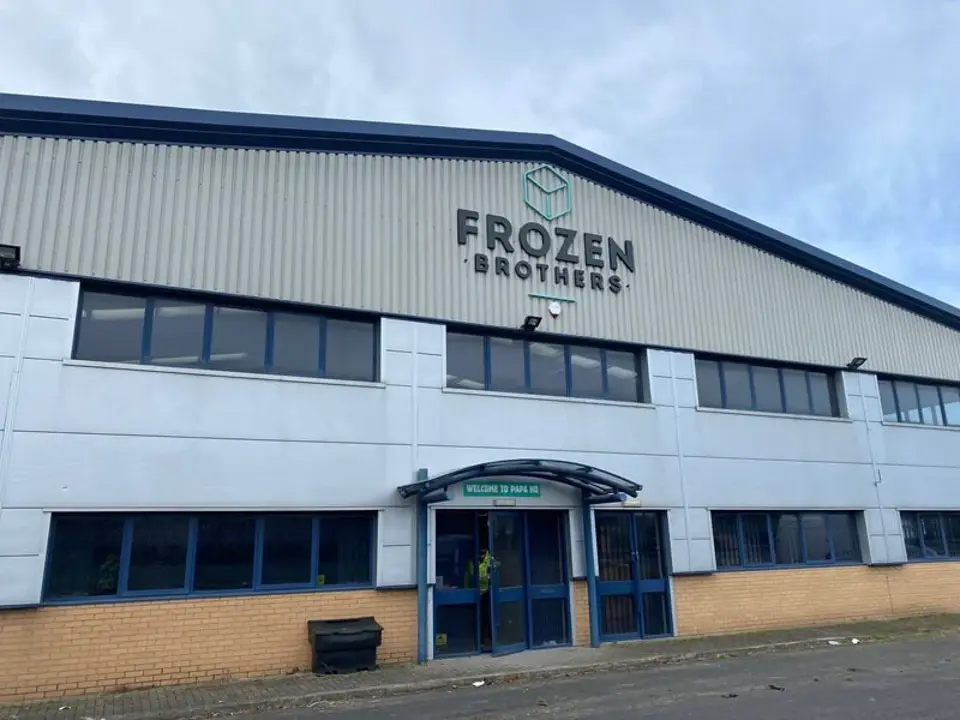
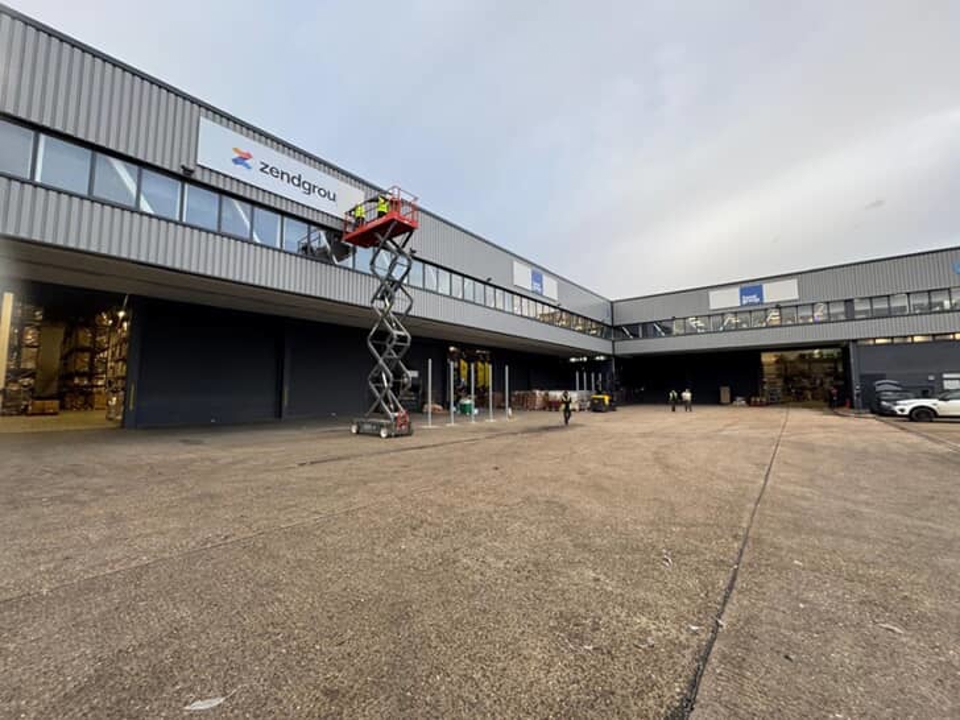
Managing multi-location signage, across multiple locations, usually starts with a simple goal: make the brand look identical everywhere. But between local permits, distinct architectural footprints and rogue franchisees ordering off-script, the reality quickly turns into a logistical nightmare. Achieving true consistency at scale isn't just about handing out a brand guidelines PDF; it requires a systematic framework that transforms spaces seamlessly, no matter the postcode.
Establishing a cohesive multi-location signage programme balances rigid centralised brand integrity, with the flexible site-specific execution each location demands. This guide outlines a proven five-phase approach to auditing, designing, specifying and deploying a scalable signage system, that protects your equity and eliminates location-by-location friction.
By the end of this blueprint, you'll see how managing a multi-location signage rollout doesn't have to fall entirely on your internal operations team, especially when you have a dedicated national partner like FASTSIGNS managing the scale, compliance and rollout for you.
Phase 1: Establish Centralised Brand and Visual Standards
Brand consistency across locations is essential to building trust and projecting professional authority. Before any physical signs are fabricated, define a unified visual standard that guides every asset:
Colour Matching Accuracy: Maintain strict adherence to your brand colour palette. For secondary design elements or visual depth, specify value shifts of no more than in Hue, Saturation, and Brightness (HSB), to guarantee a polished, harmonious aesthetic across all layouts.
Unified Typographic Rules: Dictate exact font families and case usage (such as initial-case vs. uppercase mandates), to establish a clean visual rhythm.
Consistent Visual Motifs: Integrate repeatable visual motifs, such as defined holding shapes, borders or specific punctuation layouts (e.g., using single quotation marks in small configurations and double quotation marks in larger spaces), to create an instant brand cue that audiences associate with your business.
Brand Voice Alignment: Align visual designs with a specific brand personality (e.g., confident, experienced and helpful rather than corporate and inflexible), to drive client connection and intimacy.
Case Study: How FASTSIGNS Delivered Scalable Precision for Atlas Display
When Atlas Display, a premier UK-based commercial interior design, shopfitting and refurbishment specialist, needed a trusted visual communications partner for a high-stakes multi-site rollout, they partnered with FASTSIGNS. Business Development Manager, Steve Proctor required a comprehensive partner capable of handling technical sourcing, custom fabrication and rapid manufacturing, under tight deadlines, while maintaining uncompromising quality control, across all deliverables.
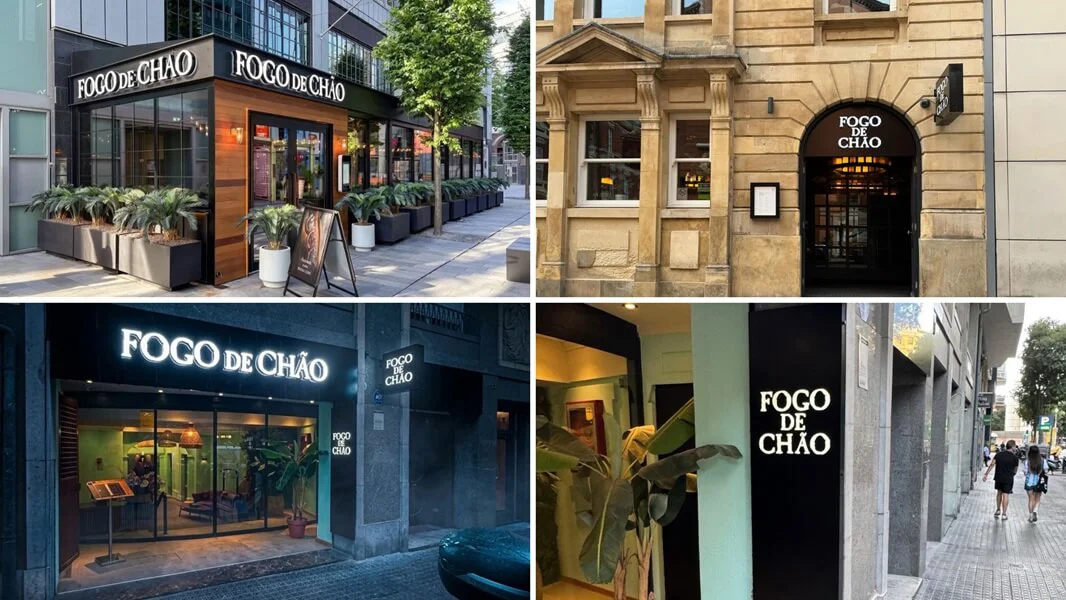
Photo caption: FASTSIGNS partnered with Atlas Display on a large-scale project delivering custom-engineered signage and synchronised global logistics.
The project demanded meticulous execution across both domestic and international footprints. FASTSIGNS provided bespoke custom engineering for key UK sites in Liverpool, Birmingham, and Leeds, ensuring each installation perfectly fitted local architectural requirements. Simultaneously, the team managed synchronised global logistics, to coordinate same-day installations for international locations in Palma and Barcelona. Through proactive project management and technical expertise, FASTSIGNS delivered an end-to-end signage solution that exceeded expectations and strengthened brand impact across every venue.
Phase 2: Execute Site-Specific Audits and Needs Analysis
While brand standards are centralised, physical footprints differ. A successful rollout requires a Visual Communications Needs Analysis and a site-level walkthrough for each property.
Audit the Guest Journey: Physically walk each location to experience exactly what a client or visitor sees, starting from the property entrance to car park navigation, then to the building entrance, reception and final destination (such as conference rooms, toilets or service counters).
Identify Local Gaps: Map out critical navigation bottlenecks, areas of visitor confusion, outdated directory listings and worn or weathered branding elements.
Determine Local Regulations: Signage codes, permitting requirements and compliance standards can vary by county. Work with localised data, to ensure proper permitting and planning audits can be conducted without delays.
Phase 3: Design a Tiered Wayfinding and Regulatory Blueprint
A cohesive system features layered signage tiers that work together, to guide visitors naturally through physical spaces:
Tier 1: Building and Site Identity: Anchor property perimeters with high-durability external identification, such as custom-carved monument signs, totems and illuminated building channel letters, to project structural strength and brand permanence from a distance.
Tier 2: Directional Wayfinding: Guide vehicles and pedestrians with intuitive parking structures, site maps and directional and floor graphics, to minimise stress and prevent traffic bottlenecks.
Tier 3: Interior Branding and Environment: Turn empty spaces into branded client environments, using large-format wall graphics, frosted privacy glass films, dimensional lobby logos and lift directories.
Tier 4: Accessibility and Regulatory Compliance: Never sacrifice branding for compliance. Deploy custom, brand-compliant accessible signs adhering to the Equality Act 2010 and BS 8300 standards, featuring tactile lettering and Braille to guarantee universal accessibility, while preserving your aesthetic theme. Ensure all safety signage complies with Health and Safety Executive (HSE) guidelines and BS EN ISO 7010, remaining clearly visible.
Phase 4: Standardise Durable Substrates and Material Specifications
Multi-location programmes demand robust, commercial-grade substrates that withstand high traffic and weathering to preserve their allure for years to come. Select and specify materials based on site applications:
For Exterior Durability (Long-Term): Specify Aluminium (1mm, 2mm, or 3mm) for parking, wayfinding and exterior building signs. It is lightweight, resists high winds and does not rust. Use Aluminium Composite Material (ACM) for highly durable, dual-use flat panels.
For Interior Aesthetics (Long-Term): Standardise on Acrylic (ranging from 3mm to 25mm thickness) for lobby signs, directories and awards. It is translucent, lightweight, highly durable and easily shaped. Use Foam PVC (3mm to 12mm) as a budget-friendly option for interior dimensional lettering and point-of-purchase displays.
For Dimensional Architectural Detailing: Utilise High-Density Urethane (HDU) for lightweight dimensional exterior letters, as it will not rot and is easily sanded or sandblasted. For large-format site V-boards, use MDO Plywood (12mm to 18mm) to guarantee outdoor performance up to 5+ years.
For High-Impact Temporary Campaigns: Deploy Corrugated Plastic (Coroplast) for inexpensive temporary roadside A-boards or pavement signs and specify grommeted, webbing-reinforced Banner Material for outdoor seasonal promotions and event backdrops.
Phase 5: Streamline Procurement and Portfolio-Level Rollouts
The greatest challenge of a multi-location signage project is execution at scale. Fragmented purchasing, across different local sign companies, leads to inconsistent colours, misaligned materials and varying installation standards.
Partner with a Single-Source Provider: Consolidate your programme under a single visual communications partner who can coordinate design, colour-matching, material replication, permitting and installation across your entire network.
Find a Provider Who Offers E-commerce Options: A private e-commerce storefront centralises multi-location signage rollouts by giving decentralised teams 24/7 access to pre-approved, brand-compliant templates while routing orders directly through your existing Enterprise Resource Planning and procurement systems. This streamlines fulfilment to hundreds of sites, eliminates design errors and maintains strict brand and budget control across every project.
Appoint Unified Stakeholders: Align with internal multi-site decision makers such as Portfolio Managers, Sales Directors and Franchise Brand Compliance Managers. Consolidating procurement under one regional standard ensures visual consistency, simplifies ordering with a single point of contact and unlocks volume discounts and more.
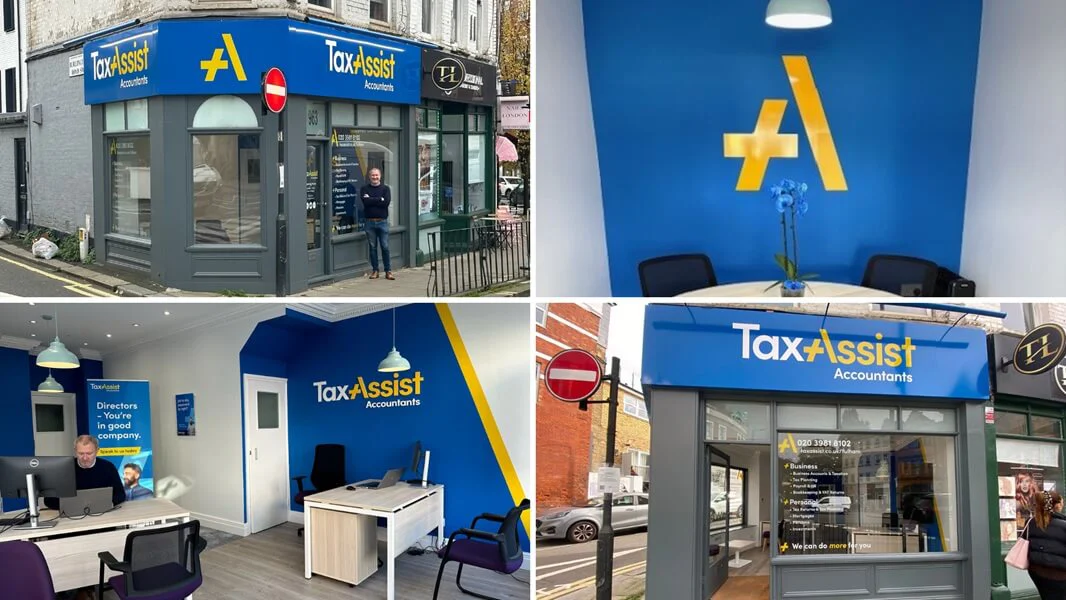
Photo caption: From initial consultation through a multi-location signage rollout, FASTSIGNS partnered with TaxAssist Accountants to maintain consistent signage across its rebranding network.
Accountants Rollout Rebrand with FASTSIGNS Support
FASTSIGNS UK partnered with franchise operator TaxAssist Accountants to execute a comprehensive rebrand across their network of over multiple store locations in the UK, requiring consistent quality and swift execution.
The Solution: Following initial head office strategic alignment meetings, FASTSIGNS franchisees conducted detailed site surveys, provided fully costed visual mock-ups and translated overall brand guidelines into clear, actionable signage instructions. To ensure complete buy-in, representatives attended the official rebrand launch event, to engage directly with the franchisee network and gather site requests. Working in close collaboration with the support centre, the team developed tailored mock-up designs, completing full production and installation, within a strict four-week timeline under a dedicated service level agreement.
The successful rollout was commended by key stakeholders, including Marketing Manager Danielle Fish, who commented, “Collaborating with FASTSIGNS has been instrumental in devising the new Brand Standards for our franchise signage and the successful rollout of our new brand to many of our locations. The FASTSIGNS team’s expertise and ability to deliver high-quality signage, cost-effectively and on brand has helped achieve brand consistency across our franchise network. We couldn’t have asked for a better team to partner with to bring our refreshed identity to life in our stores."
3 Questions to Ask Before Starting a Multi-Location Signage Rollout
Before kicking off a multi-site sign initiative, asking the right questions internally prevents costly delays, supply misalignments and compliance headaches down the line:
1. Do we have a single, centralised point of contact to manage permitting across different municipalities? Every city, county and retail park or shopping centre enforces distinct ,planning regulations and permitting timelines. Attempting to manage local reviews across dozens of locations with fragmented teams creates severe scheduling bottlenecks.
2. How will we enforce brand consistency across decentralised locations or franchisees? Without a standardised ordering channel or approved supplier list, local managers often order off-script. Ask whether your signage partner provides a central ordering platform or private e-commerce portal to maintain strict colour and design compliance across all units.
3. Are our visual standards adapted for site-specific architectural differences? A design layout that looks great on a standalone building may fail on a historic storefront, or multi-tenant shopping centre. Determining how your visual identity translates across varied building footprints, before production, ensures every site looks intentional and uniform.
Find Your Multi-Location Signage Partner
When you have a large-scale, multi-location signage project, that’s not a project to assign to just anyone. From establishing consistent visual standards to gathering site needs and then fabrication, shipment and streamlining rollouts, having one point of contact and someone that you can trust is imperative. As the leader in the custom signs and visual solutions industry with over 40 years of experience, FASTSIGNS helps customers bring their vision to life and achieve more than they ever thought possible.
Contact FASTSIGNS to begin planning your visual communication strategy today.