If you've ever designed a shop sign, only to discover that your local council won't approve it, you're certainly not alone.
We completed hundreds of Shop Front Signs and can share our expertise.
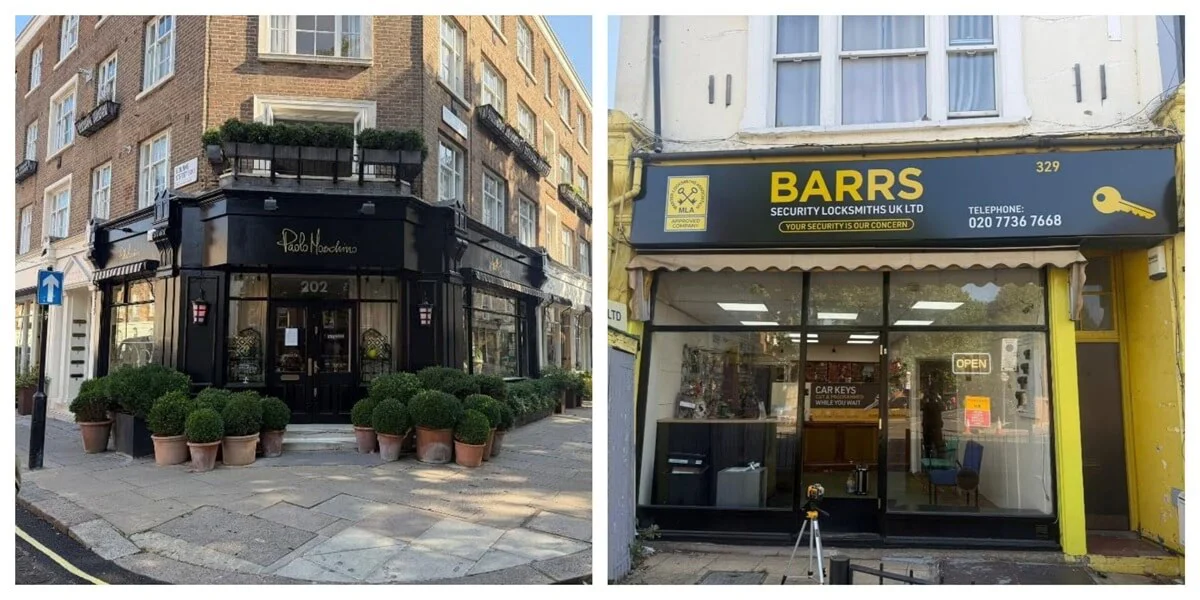
For a business owner, it can be frustrating. You've chosen your colours, designed your logo, planned your shopfront and created a sign that looks perfect for your brand. Then you discover that the council has concerns about the size, materials, illumination, position or even the building itself.
So, why was your shop sign refused?
The important thing to understand is that designing effective signage isn't only about making something attractive and visible. In London, a proposed advertisement may also need to work within planning requirements, local design guidance and the character of the surrounding area. Depending on the property and the type of sign, you may need advertisement consent, and listed buildings can involve additional considerations such as Listed Building Consent. Some advertisements may benefit from deemed consent if they meet the relevant conditions.
At FASTSIGNS® Hammersmith, we believe good signage starts well before anything goes into production. The building, the location, the surface, the surrounding environment, the branding and the practical installation requirements all need to be considered.
Here are some of the most common reasons a shop sign can run into problems in London — and why getting the design right from the beginning can save time, money and frustration.
1. The sign is too large for the building
When you're paying for a new sign, it's tempting to think that bigger automatically means better visibility.
It doesn't.
A large illuminated fascia might work perfectly on a modern retail unit, but look completely out of proportion on a narrow Victorian shopfront. Planning authorities can consider the size and relationship of an advertisement to the building and surrounding street scene when assessing proposals.
This is why professional signage design should consider the proportions of the building, not just the size of the available branding.
Sometimes reducing the height of lettering, introducing more negative space or using individual built-up letters instead of a large fascia panel can create a stronger result.
The goal isn't simply to create the biggest sign possible. It's to create a sign that is visible, legible and appropriate for its location.
2. The illumination is considered inappropriate
Illuminated signage can be extremely effective, particularly for businesses that operate in the evening. However, lighting can also be one of the areas that creates planning concerns.
The type, intensity and positioning of illumination can all matter. In sensitive locations, particularly conservation areas, certain forms of internally illuminated signage may be discouraged or restricted, while more discreet solutions may be considered more appropriate.
That doesn't necessarily mean that a business has to choose between having no lighting and having a large illuminated box sign.
There are many different approaches, including halo illumination, individually illuminated letters and discreet external lighting.
The right solution depends on the building and its location.
This is one reason we recommend considering the physical environment before deciding what type of illuminated sign you want.
3. The premises are in a conservation area
London has a huge number of conservation areas, and this can make signage considerably more sensitive.
Conservation areas are intended to protect areas with special architectural or historic interest. As a result, councils may pay particular attention to how shopfronts, fascias, projecting signs, materials and illumination affect the character of the area.
For example, local conservation guidance may favour traditional materials, restrained lettering and discreet illumination rather than large, highly illuminated modern sign boxes.
But being in a conservation area doesn't mean your business has to disappear behind a traditional-looking sign.
The challenge is finding a way to translate your brand into a signage solution that respects the building.
This is where material choice, lettering style, scale and illumination can make a significant difference.
4. The building is listed
If your business operates from a listed building, you need to be even more careful.
The Planning Portal explains that Listed Building Consent may also be required in addition to advertisement consent, depending on the circumstances.
For a listed property, the question isn't simply whether your new sign looks professional. You also need to consider whether the proposed installation could affect the building's architectural or historic character.
That can influence everything from the position and fixing method to the materials, illumination and amount of the building that the signage covers.
If you're opening a business in a listed property, it's particularly important to investigate the requirements before manufacturing the sign.
5. The materials aren't appropriate
Materials are sometimes treated as a purely aesthetic decision.
They're not.
The material you choose affects the appearance, weight, durability, fixing method and overall relationship between the sign and the building. Planning authorities can also consider the materials proposed for an advertisement.
A glossy illuminated acrylic panel might be ideal for one business, while individually cut lettering, aluminium composite or another more understated solution could be more appropriate somewhere else.
We've seen this first-hand at FASTSIGNS Hammersmith.
For our Chiswick Auctions project, the original concept involved an illuminated entrance sign. Following a site survey, we established that signage couldn't be installed directly onto the glass. Rather than forcing the original idea onto the building, we developed an alternative solution using matching channels and 20mm acrylic lettering for the gallery, alongside 3mm Dibond flat-cut lettering for the warehouse.
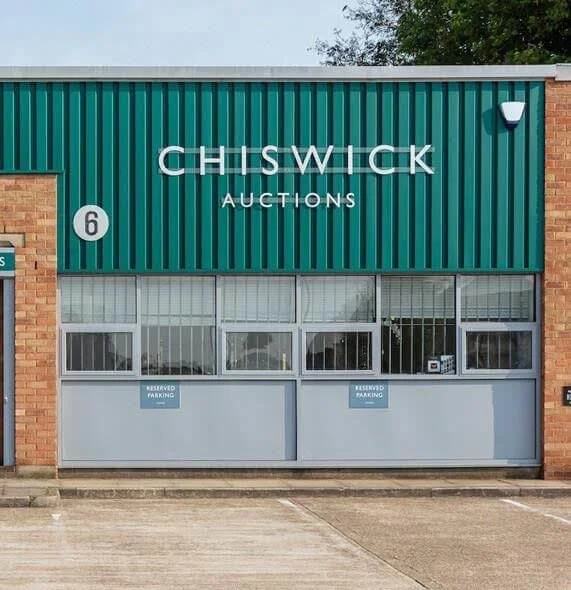
The result provided a consistent visual identity while working with the practical limitations of the site.
That's an important part of professional signage: sometimes the best solution isn't the first solution you imagined.
6. The sign doesn't work with the architecture
A shop sign is part of a building's frontage.
If the design covers architectural details, ignores existing proportions or looks visually disconnected from the building, it can create problems from both a design and planning perspective.
This is particularly relevant for older London buildings, where details such as cornices, brickwork, traditional fascia proportions and decorative features can be important to the overall appearance.
Instead of treating the building as a blank canvas, look at what is already there.
Could individual letters work better than a large panel?
Could the existing fascia be reused?
Could the logo be scaled down while remaining highly visible?
Could the sign be positioned differently?
Good commercial signage should make a business more noticeable without making the building itself disappear.
7. The projecting sign is too intrusive
Projecting signs are popular because they can make a business visible to pedestrians approaching from either direction.
But they also extend beyond the face of the building, so their size, position and fixing need to be considered carefully.
The Planning Portal identifies projecting signs as advertisements that can fall within the advertisement-consent system.
Before installing one, consider the building, the pavement, the surrounding street and the relationship between the sign and other features.
A projecting sign should provide useful additional visibility — not become an obstruction or an unnecessarily dominant feature.
8. The proposal doesn't follow local design guidance
One of the biggest misconceptions about signage in London is that there is one universal set of rules for every shop.
There isn't.
Different London boroughs have their own planning policies and design guidance, while individual conservation areas can have additional considerations.
That means a signage solution that works perfectly well on one London high street may not be appropriate for another.
For example, Westminster's guidance highlights factors including the design, size, materials, illumination, siting and fixings of advertisements, as well as their relationship with the building and the surrounding street scene.
So if you're opening a new premises, don't simply copy the sign from your previous location.
Start with the new building and its surroundings.
9. The application doesn't clearly show what you're proposing
Sometimes the issue isn't the basic signage idea — it's that the proposal doesn't provide enough information to properly understand it.
Depending on the application, information may be required about the advertisement's size, position, materials, illumination and fixing method. Some applications can also require drawings, cross-sections, photographs or visual representations.
This matters because there's a big difference between showing a logo on a computer screen and showing exactly how a three-dimensional, illuminated sign will look when installed on a real building.
A good proposal should make it easy to understand:
What is the sign?
How big is it?
Where will it sit?
What is it made from?
How will it be illuminated?
How will it be fixed?
What will it look like in relation to the existing building?
The more clearly these questions are answered, the easier it is to assess the proposal.
10. The sign works for the brand — but not for the location
This is perhaps the most important lesson.
A company's brand guidelines might specify particular colours, fonts, logos and signage styles. But a brand shouldn't necessarily be reproduced in exactly the same physical format at every location.
Imagine a business with a bold corporate identity opening two premises: one in a modern business park and another in a historic London high street.
The principle is simple:
The best signage solution is the one that works for the brand AND the building.
What Should You Do If Your Shop Sign Has Been Refused?
If you've received a refusal, don't immediately order a completely different sign.
First, carefully look at the reasons given in the decision.
Then consider whether the problem relates to:
The size of the sign
Its position
Illumination
Materials
Fixings
Projection
The building itself
Conservation-area requirements
Listed-building considerations
The information provided with the application
In some cases, a relatively small change can make a significant difference.
Changing a large fascia to individual letters, reducing illumination, adapting the material, changing the fixing method or adjusting the position could potentially create a more appropriate solution.
And importantly, do this before production wherever possible.
Manufacturing a sign first and discovering afterwards that it cannot be installed is an expensive way to learn the lesson.
Why Professional Signage Design Matters
At FASTSIGNS Hammersmith, we don't see signage as simply a matter of printing a logo and putting it on a wall.
Every project has its own challenges.
The building might have an unusual façade.
The surface might not accept the material you originally considered.
The business might need to maintain a strict brand identity.
The premises might be rented.
The property might be in a conservation area.
The client might want illumination that isn't appropriate for the location.
Or the sign may need to be visible from a busy London street while still working with the architecture.
That's why our approach starts with understanding the site, the business and the objective.
We've delivered signage and graphics for a wide range of environments, from commercial offices and healthcare spaces to retail and auction premises. Projects such as Chiswick Auctions, Kedrion and Tommy's at Queen Charlotte's & Chelsea Hospital demonstrate the importance of designing signage around the specific environment rather than applying a one-size-fits-all solution.
For Tommy's, for example, the project involved wall graphics, acrylic plaques, room identification signage, donor recognition displays and other branded elements, creating a coordinated visual system within a healthcare environment.
Because effective signage isn't just about being seen.
It's about being seen in the right way.
Planning a New Shop Sign in London?
If your business is opening, relocating, rebranding or updating its premises, it's worth thinking about signage before the design reaches production.
The right questions are:
What does the building allow?
What does the local area require?
What will make the business visible?
Which materials are suitable?
How should the brand be adapted to the space?
How will the sign actually be installed?
At FASTSIGNS® Hammersmith, we help businesses across London turn their branding into practical signage and visual communication solutions — from shopfront and fascia signage to built-up letters, window graphics, wall graphics, wayfinding and more.
If you're not sure what type of signage is right for your premises, start with a conversation rather than a production order.
Talk to FASTSIGNS Hammersmith about your next signage project
Planning and advertisement-consent requirements vary depending on the property, sign and local authority. This article provides general information and should not be treated as legal or planning advice. Always check the current requirements with the relevant local planning authority before installing signage.
Frequently Asked Questions
Why was my shop sign refused by the council?
A shop sign can be refused for a number of reasons, including its size, position, materials, illumination, fixing method or impact on the building and surrounding area. Conservation areas and listed buildings can also have additional considerations.
Do I need planning permission for a shop sign in London?
Not always. Some advertisements may benefit from deemed consent, while others require express advertisement consent. The requirements depend on the specific advertisement and property.
Can I have an illuminated shop sign in London?
Potentially, but the type and design of illumination matter. Additional restrictions or design considerations can apply in conservation areas and other sensitive locations.
Can I put a shop sign on a listed building?
Potentially, but additional permissions may be required. The Planning Portal notes that Listed Building Consent may also be necessary in relevant circumstances.
Does my landlord need to approve my shop sign?
Planning consent and landlord permission are separate issues. If you rent your premises, check your lease and obtain any required landlord or freeholder approval before proceeding.
Can FASTSIGNS help me choose the right shop sign?
Yes. You don't necessarily need to arrive with a finished design. A signage specialist can help you consider the building, branding, materials, installation and practical requirements before production.

