Healthcare facilities face an underlying symptom, but the remedy is simple. According to the National Centre for Social Research, 53% of UK adults lack trust in the future of healthcare. Trust might seem challenging to tangibly improve, but the experiences you create can have a profound impact on that.
How Can Strategic Visual Communication Build Trust in a Healthcare Facilities?
A branded interior can create comfort, solidify the connection with your facility and leave a lasting impression on patients, staff and families. Your built environment contributes to healthcare trust in a variety of ways. Whether it’s helping people find their way, showing how you keep them safe, utilising helpful technology, or allowing them to notice the accessible nature of your location, strategic visuals ensure that everyone leaves with a great impression.
The signs you use convey what you want patients, visitors and staff to feel. They are not just an added part of your environment and convey everything from regulatory requirements, to brand recognition and user needs. Here are five ways you can address healthcare challenges and build trust, with strategic signage that enhances the patient experience in healthcare facilities.
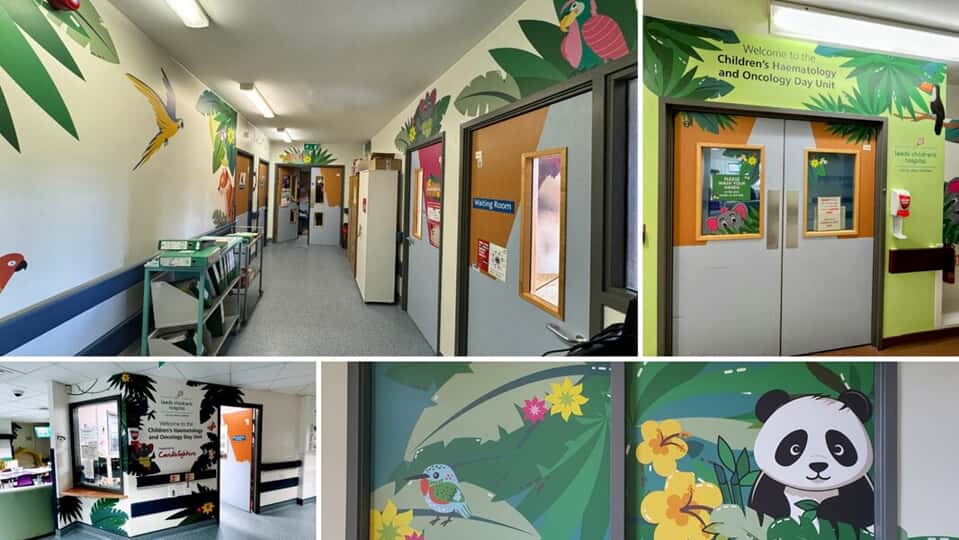
Photo Caption: Create comfort and enhance the patient experience with thoughtfully branded visuals.
Navigation and Healthcare Wayfinding Signage
Visitors and patients often arrive at large hospital campuses, multi-building facilities, or complex clinics when seeking care. They may be anxious, physically impaired, or in urgent need of help. Without intuitive signage, they can become confused and disoriented, creating stress, safety risks (especially in emergencies) and inefficiencies.
Since research shows that feeling disoriented or lost is linked with higher stress levels, functional wayfinding is a necessary solution for a positive visitor experience. From confusing corridors to unclear exits, creating a well-planned healthcare signage design strategy ensures patients or visitors won’t waste time wandering. Key elements include monument signs at facility entrances, directories in lobbies, ceiling-hanging directional signs, floor graphics, maps and consistent visual cues, such as colours or universal hospital signs and symbols across locations.
Did You Know? This study shows that hospital signage plays a crucial role in promoting safety, emergency preparedness and enhancing the patient experience, indirectly contributing to better patient care.
Measurable Benefits of Enhancing Patient Flow with Signage
- Reduced Confusion: Improves first impressions and overall patient satisfaction.
- Faster Navigation: Leads to reduced wait times and enhanced patient flow with signage.
- Empowered Staff: Frees front-line staff from giving manual directions, allowing them to focus on core customer service.
- Enhanced Brand Perception: The facility looks modern, professional and accessible.
- Improved Compliance and Safety: Signs clearly and safely mark hazards, exits and restricted zones.
- Flexibility and Future-Proofing: Digital signage for hospitals allows real-time messaging updates.
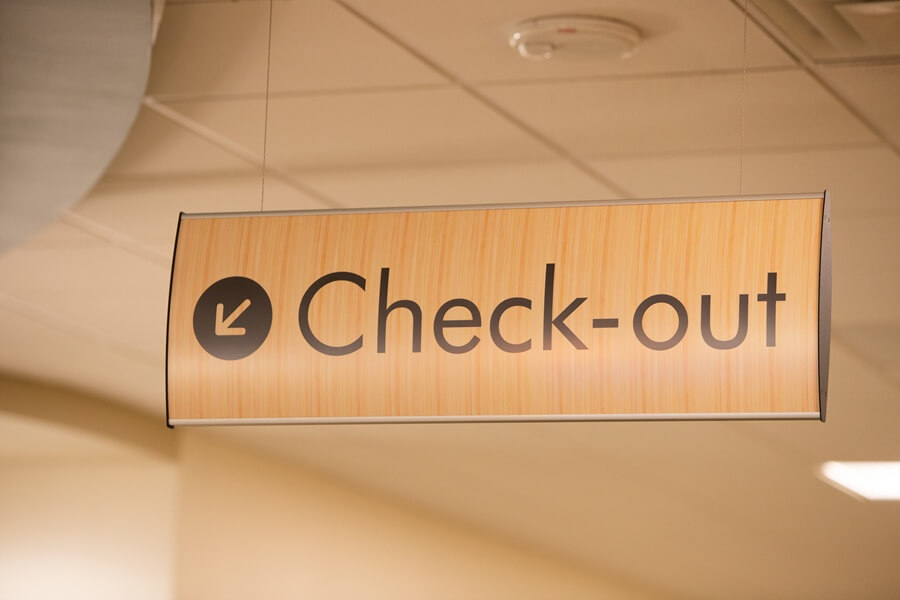
Photo caption: Enhancing patient flow with signage is a proven way to optimise clinic efficiency and improve overall satisfaction.
Accessibility, Diversity and Health Literacy
Healthcare settings serve very diverse populations: different languages, literacy levels, disabilities (vision, mobility, cognitive) and age ranges. If signage is overly complex, language-dependent, or uses ambiguous icons, it fails large segments of your audience.
You elevate trust in your healthcare setting when you account for physical impairments, language differences and stress conditions. Signage should meet DDA standards, including Braille, tactile elements and high contrast.
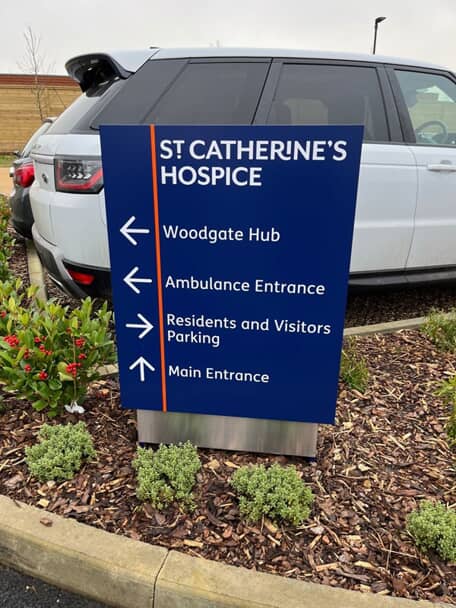
Photo caption: Create a more accessible healthcare facility with DDA-compliant medical signage.
To best accommodate low-literacy or non-native language visitors, incorporate universal pictograms (such as standard symbols for restrooms, exits and waiting rooms) to minimise text dependence. Using consistent symbols and iconography could be the crucial difference in critical moments of care.
Safety, Compliance and Critical Messaging
Healthcare facilities must communicate safety protocols (biohazards, infection control, restricted areas, emergency exits, traffic control) and regulatory signage (DDA-compliant medical signage for toilets/rooms). If signage is missing, illegible, poorly placed or out-of-date, it can compromise safety, reduce compliance and expose the facility to liability.
Bold, high-contrast and strategically placed medical safety signage, communicates your professionalism and attention to detail, while fostering a deeper sense of trust.
Brand Identity, Staff Guidance and Operational Efficiency
Another highly effective way to create trust is through fully branded healthcare environments so staff, families and patients feel safe and comfortable. Signs can often be the first experience someone has with your facility. A facility that looks cohesive and professional, instills confidence. On the other hand, worn and confusing signage undermines your visual identity, causing frustration and burdening staff, who have to manually direct patients. This can also lengthen patient wait times. According to the article linked above, “brand identity becomes a visual cue that [a patient is] making the right choice in a healthcare provider and is a promise you make to everyone who engages with you.”
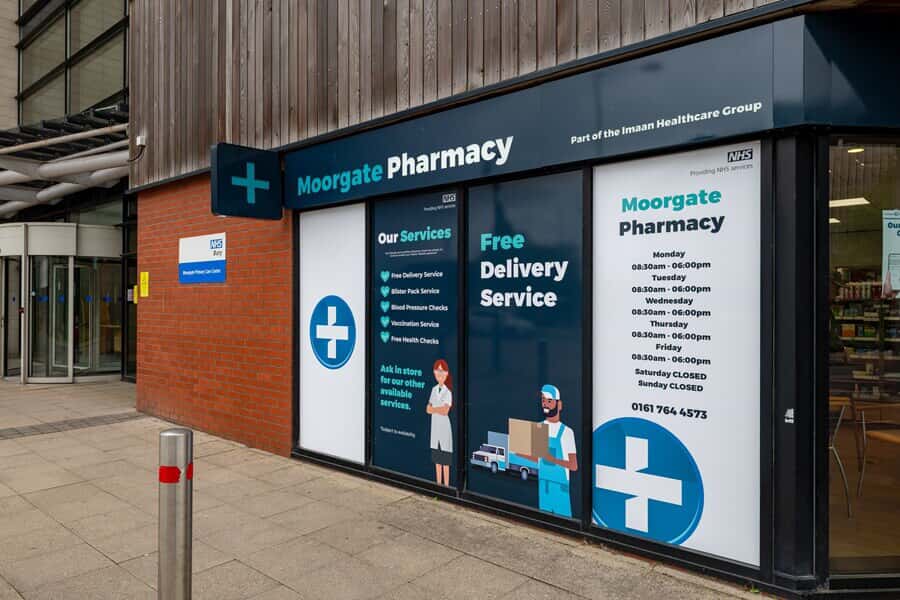
Photo caption: Branded custom visuals can positively impact patient experience in healthcare facilities.
Beyond basic navigation, visual communication supports staff workflow, operational efficiency and the patient experience:
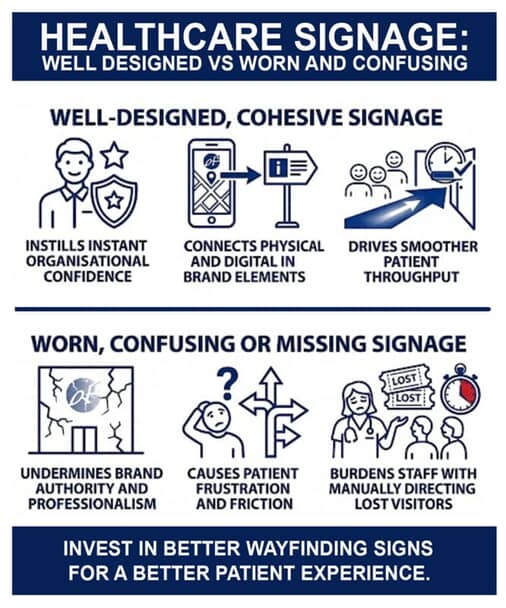
Thoughtfully designed visuals and intuitive layouts encourage trust and communicate your purpose for providing quality of care.
Digital Signage for Hospitals and Changing Technologies
Modern healthcare facilities are increasingly complex: multiple wings, satellite buildings and outpatient clinics. Traditional static signage just doesn’t suffice anymore, so facilities need to integrate digital signage and interactive kiosks.
The goal is to coherently align physical and digital signage for hospitals. Digital signage allows real-time messaging, conditional messaging (e.g., emergency redirect, crowded area alerts) and flexible updates. From scheduling to staying aware of patients, a well-organised digital wayfinding system can direct visitors, professionals and employees to their desired destination. With the blending of digital and physical elements, every touchpoint plays a role in creating complete brand recognition. Furthermore, screens can double as tools for educating patients, while they wait or displaying calming elements of biophilic design to significantly reduce environmental anxiety.
Case Study: Transforming the Patient Experience at St James’s Hospital
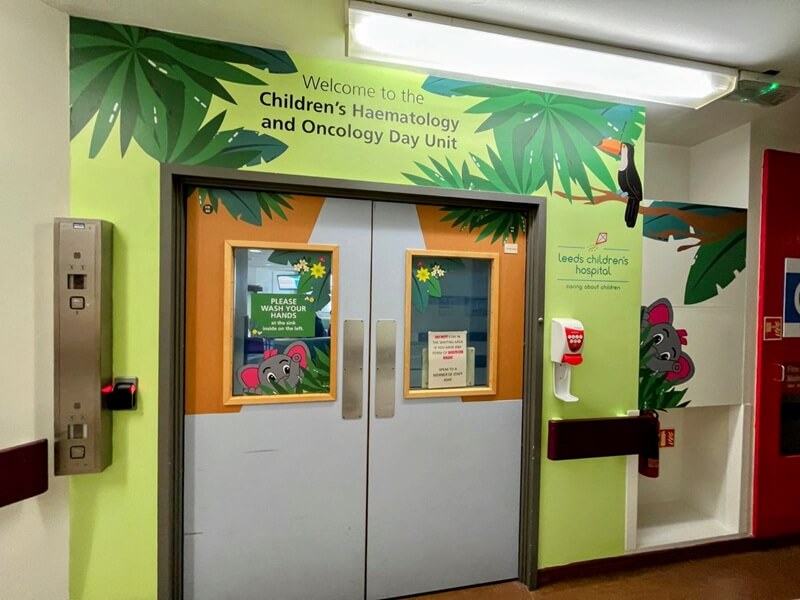
To support local charity Candlelighters in elevating the patient experience, FASTSIGNS Leeds transformed the children’s cancer treatment wing at St James’s Hospital. The team supplied and installed over 300 square metres of bespoke wall, floor and ceiling vinyl graphics, across the Children’s Radiotherapy Department, the children’s day unit and the teenage chillout areas. Featuring calming colours, imaginative illustrations and interactive counting elements, designed in collaboration with Scamp Creative, these immersive environmental graphics act as a positive visual distraction, to reduce anxiety during long treatments. Completed on a voluntary basis by the FASTSIGNS team with supplier support, the strategic overhaul replaced the typical clinical feel with a bright, comforting environment, easing navigation, comforting young patients and their families and allowing medical staff to focus on delivering exceptional healthcare.
Driving the Patient Experience Forward
In short, signage plays a functional and experiential role in a healthcare facility. Functionally, it guides people, communicates safety and improves flow. Experientially, it reinforces brand identity, enhances the waiting environment, reduces stress and builds lasting trust. Contact FASTSIGNS today to transform your healthcare facility into a branded environment that provides an exceptional customer experience for all.